- Podcast
- Vacas lecheras
- Gestión
- Rendimiento
The Evolving Role of the Modern Dairy Nutrition Consultant
This episode is available in English only.
Discover how practical nutrition, trusted relationships, and data-driven decisions help dairy consultants improve herd performance, profitability, and long-term farm success.
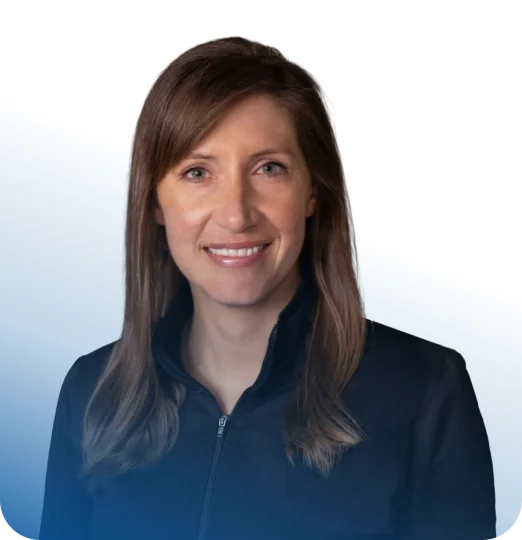
Our Guest Jodi Erickson
Jodi grew up on a dairy farm in Central WI, where her passion for agriculture and dairy nutrition first began. Her parents operated the dairy farm until retiring from dairy production three years ago. She attended the University of Wisconsin–River Falls, where she earned a bachelor’s degree in Agricultural Business and Dairy Science. She began a career in nutrition in 2009 and spent 13 years working for a private feed mill, building valuable experience in dairy and youngstock nutrition.
In 2022, she transitioned to private consulting, where she continues to work closely with producers to improve herd performance and farm profitability through practical, results-driven nutrition strategies.
¿Tiene una sugerencia de tema?
¡Incluso puede convertirse en nuestro próximo invitado!
Timestamps & Summary
Chris Gwyn (02:00)
What drew you into dairy consulting, and how has that role evolved over the years as both the industry and your customers have changed?
Jodi Erickson
Back in the early 2000s, when I was hitting the job market, nutrition wasn't a career that I was seeking out, but there was an opportunity to work with an established team, an established feed supplier, and I was qualified for the job. It was shortly after that that I discovered my true passion for this career. […]
Over the last 15 to 20 years, my day-to-day role has had to adapt and evolve right along with the industry. I guess the first thing that comes to mind is the precision that we can do things now and the data that we have access to. […]
Chris Gwyn (07:26)
What does a day look like and what does a week look like in Jodi Erickson's dairy consulting business?
Jodi Erickson
My team is a team of 4 nutritionists. So, we do pretty much work independently. We do overlap on farms, just depending on size and location to a degree. But I'm generally covering dairy farms in east-central Wisconsin into central Minnesota. Generally, I am on farms every day of the week, some fairly closer to home to allow for a little bit more office time. But then obviously there are some very long, high-mileage days that happen as well. […]
But my routine farm visits, they're still based around finding what the obstacle is on the farm. Whether that's just visually identifying we're going to have a feed change, how are we going to blend, how are we going to transition this? This is something that we do 4 to 5 times a year on every farm, but it still seems like we need to revisit the procedure every time so it gets done correctly. […]
Chris Gwyn (12:12)
You have a family, you have farm work, you have your dairy consulting. How do you balance all that? What's your key to success in that area?
Jodi Erickson
The key to success there might just be failure. I can reflect on my earlier years with my children, during the hard stages of life when they're not sleeping through the night. So, all that whole dynamic, and I did lose accounts. It was a hard time in my career. And I think, in hindsight, those are probably the accounts that you weren't going to have long-standing relationships with anyway. Generally, something that I see on farms more and more is women stepping up into leadership roles. And these women have all lived through that as well. And it's just becoming, I think, more accepted. […]
But it's still a challenge, I guess. And you know, just communication. Again, it goes back to communicating with my customers. They're aware of what my life looks like, and they're respectful of me and my time. And those are the people that I want to align with.
Chris Gwyn (14:51)
If you reflect back on your 20 years of dairy consulting experience, how do you see that the role has changed over that time?
Jodi Erickson
What's really neat about the market that I'm in is we still have really quite a few dairy farms that are under 100 cows. We still have a lot of tie stall farms, a lot of upright feed units, silos, harvesters, etc. But really, our larger farms are expanding, and they are expanding rapidly. So, it's really neat. What used to be having 3, 4, or 5 large 500-cow freestyle farms was a pretty significant milestone when I was young in my nutrition work. And now, that's kind of the norm. I'm on more of the freestyle herds than the tie stall herds. And a lot of these farms, they grew within. So, the owners and the management are making these developments and management changes, really right along with myself. […]
Chris Gwyn (20:04)
I'd love if you could share an example of a small management change that you introduced to a client or a client introduced to you that really unlocked real key benefits later on or at that moment.
Jodi Erickson
Probably the first thing that comes to mind when you say a small management change, it's still really focusing on some of the basics in nutrition work. And you see people maybe with the Penn State Shaker Boxes but really focusing on proper feed moisture and length. There have been several occasions where we have just focused on if we're going to be feeding straw or hay to some pre-fresh or post-fresh animals, whether that's driving off of an energy issue or a potassium issue. If cows are sorting at the bunk, they're not eating the diet that we think they are. And there have been a multitude of times that we have really focused on mixer maintenance, whether that's keeping knives sharp or throwing the pitch of regrinding a lot of this straw. Maybe that involves getting a Haybuster. […]
Chris Gwyn (32:27)
If you could leave some advice to a dairy producer working with their dairy consultant, say maybe 3 recommendations on how they could get the most value out of that working relationship with their dairy consultant, what would that be?
Jodi Erickson
I would think the first thing, honestly, is “be prepared.” […]
Another thing is to always keep in the back of your mind that when things are going wrong, it's very easy to blame a person, whether it's a nutritionist or a feeder on a farm. But at the end of the day, we are all on the same team. We're all fighting to win. […]
I would really say those are probably my two big sound pieces of advice. Have a lot of trust but also utilize everyone's time. Be prepared.