- Article
- Dairy
- Management
- Digestibility
Understanding the Basics of Feeding Fresh Green Chop Corn
When last year’s silo’s inventories are low and the harvest of corn for silage is delayed, most farmers will lean on feeding green chop corn to their cows to supplement forage needs while minimizing production costs.
Let's dive into how you can make the best of this feeding strategy.
The basics of green chop corn
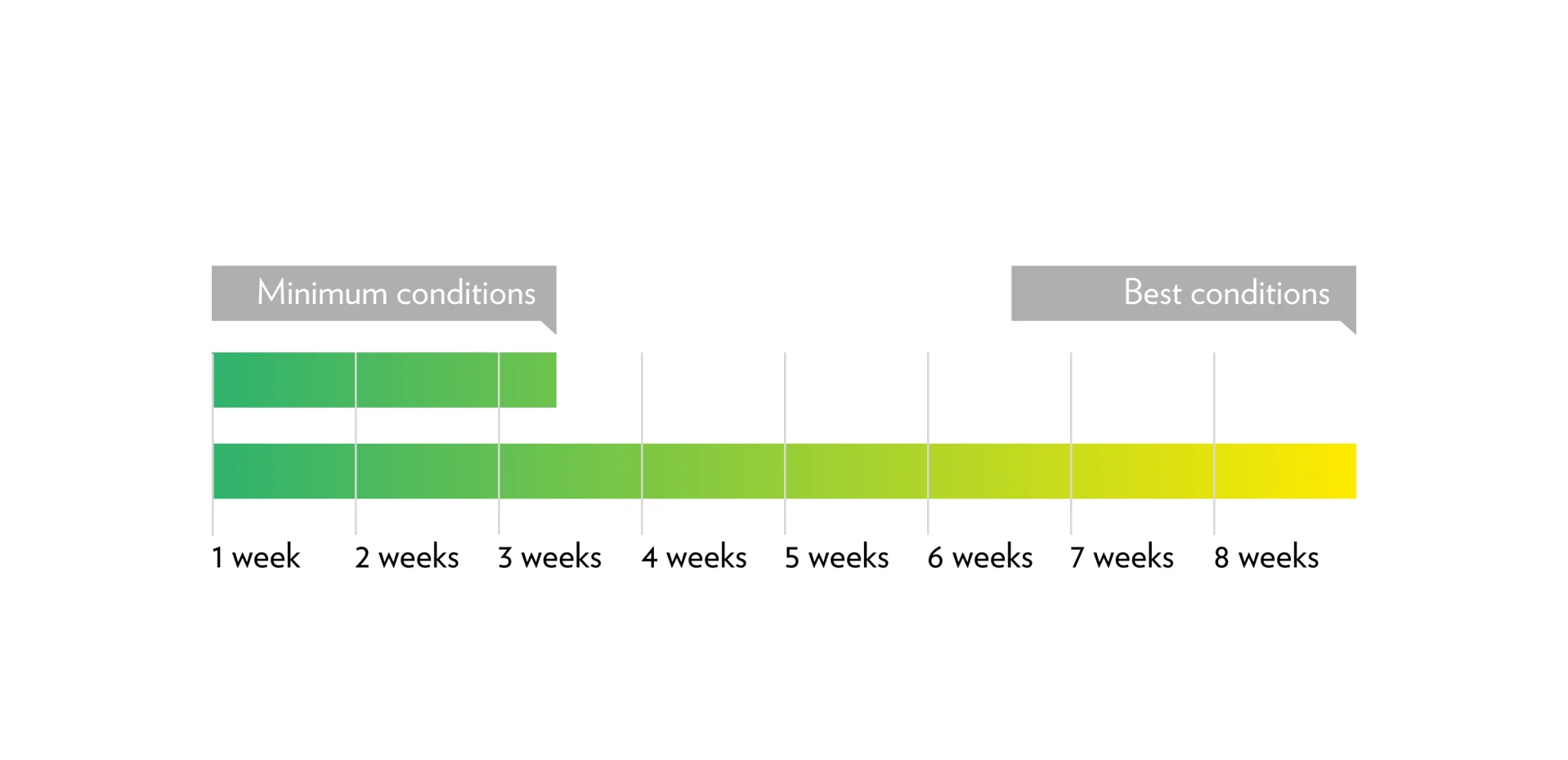
Green chop corn is the product of harvesting the corn plant and feeding it fresh, instead of first letting it go through an ensiling process. A minimum fermentation time is 2-3 weeks with ideal moisture conditions (65-68%) for the bacteria to convert the sugars into lactic and other acids and reduce the silage pH. Understanding the chemistry and kinetics of the nutrients present in fresh green chop corn is the first step to avoid any unfavourable impact on milk production, animal health and reproductive performance.
Best ensiling process cycle
A routine analysis of the green chop corn harvested in early stage will show higher moisture levels (70 to 80%) compared with a well fermented mature corn silage (65 to 68%). In addition, sugar levels will be remarkably higher (3 to 5%), while soluble protein and rumen digestible starch would be very low.
How to avoid digestive disorders
Dairy consultants and nutritionists recognize that rumen upsets can easily and quickly result from feeding fresh green chop corn at a similar level as one would feed a well-fermented corn silage. Rumen bacteria will ferment sugars, resulting in acidosis (production of lactic acid and decreased rumen pH).
The first symptom will be a loss in manure consistency. After three or four days of feeding green chop corn at a high rate (>20 kg as fed), more than 60% of cows could show loose manure. If the feeding rate is not adjusted, cows will show clinical signs of rumen acidosis such as: diarrhea with poor body condition score, weight loss, lethargy and reduced feed intake. The elevated level of highly fermentable carbohydrates (such as sugar) has been recognized as the main culprit for this digestive disorder.
Low soluble protein in fresh green chop corn also will compromise the nitrogen that is supplied directly to the rumen microbes. An important decrease of the microbial protein and consequently essential amino acids such as lysine and methionine will take place in the small intestine. A feasible feeding strategy to compensate the lack in those essential amino acids is fortifying the lactating diets with rumen protected lysine and methionine.
Low digestible starch of green chop corn means lower available energy compared to well fermented corn silage. Supplementing rations with rumen by-pass fats will increase the energy of the ration when feeding fresh green chop corn.
Apparent ruminal synthesis
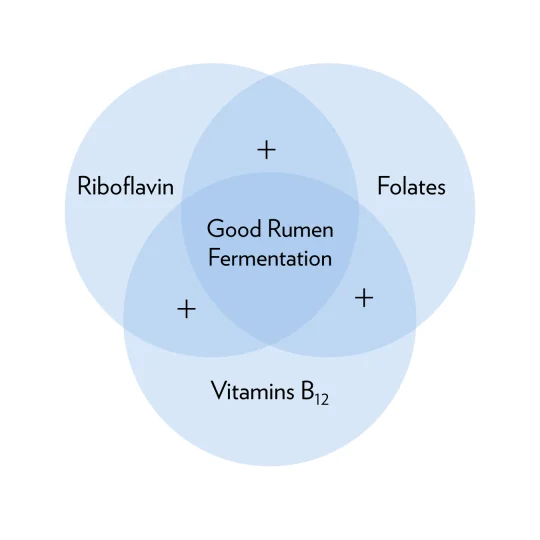
Researchers from Agriculture & Agri-Food Canada and Michigan State University found that the apparent ruminal synthesis of riboflavin, folates, and vitamin B12 were highly correlated to the amounts of digestible starch and fiber (NDF) in the ration.
How we can help you
Animals fed green chop corn could present a marginal deficiency of these B vitamins, essential coenzymes to several metabolism pathways in the dairy cow. Since most B vitamins can be degraded in the rumen, supplementation of rumen-protected B vitamins can ensure there is no deficiency in cows consuming green chop corn.
Last note, if feeding green chop corn, feed it immediately after harvest and only feed the amount that the cows will eat in two hours. If green chop is left in the bunk or on the wagon, it can heat up rapidly and nitrate will be converted to nitrite, which is very toxic to cows. Another tip is to raise the chopper height to 8 inches to reduce the amount of nitrate present in the green chop corn, especially if there was drought or heat stress.
Fresh green chop corn can be used to supplement forage needs in a time of low feed inventory, however extra attention is required in lactating diets to prevent health and production issues.
Here are some tips to remember when feeding fresh green chop corn:
- Strictly monitor the consistency and watch for other signs of rumen upset;
- Correct the lack of energy in the ration by feeding rumen bypass fat;
- Supplement a rumen protected B vitamin blend to prevent a marginal deficiency of those B vitamins;
- Properly balance amino acids with rumen protected methionine and lysine to correct the low metabolizable protein level of the ration which results from feeding a poor soluble protein forage.
Need personalized advice?
For personalized advice, reach out to your Jefo dairy representative who will help navigate these feeding strategies effectively.
Our products
See all-
Bestseller
LACTATION VB™
Vitamin Supplement for Dairy Cows -
Bestseller
JEFO DAIRY FAT 99%™
Palm Palmitic Acid (C16:0)Energy Supplement for Dairy Cattle, Sheep and Goat -
Bestseller
JEFO LYS 30™
Rumen protected lysine for dairy cows -
Bestseller
MET 55™
Rumen protected methionine for dairy cows -
Bestseller
Eazystim
Fermentation by-products on carrier -
Bestseller
Eazystim
Fermentation by-products on carrier -
Bestseller
Jefo SECURE TRANSITION™
Vitamin mix for ruminants -
Bestseller
Jefo SECURE LACTATION™
Vitamin premix for dairy cows -
Bestseller
TRANSITION VB™
Vitamin Supplement for Dairy Cows -
Bestseller
Jefo SECURE LYS™
Microencapsulated Lysine for animal nutrition
Relevant resources
See all-
- Podcast
- Management
- Performance
- Milk
Rethinking Fat Nutrition Through Individual Fatty Acids
For the last episode this season, Chris hosts Dr. Adam Lock, who explains how matching fatty acids, amino acids, and protein to lactation stage can improve milk production and nutrient utilization. -
- Article
Mineral Nutrition: More Isn't Always Better. Smarter Is.
Mineral nutrition is about more than inclusion rates. Discover how precision nutrition helps protect essential minerals in increasingly complex animal feed formulations. -
- Podcast
- Management
- Immunity
- Performance
- Stress
How Nutrition and Management make for Stronger Cattle Immunity
Dr. Jodi McGill explains how nutrition, management, vaccination and innate immunity can prepare calves to better withstand respiratory disease challenges. -
- Article
The Role of B Vitamins in Transition Cow Nutrition
In this interview with Dr. Lance Baumgard, explore the role of B vitamins in transition cow nutrition, including inflammation, metabolism, ketones, feed intake and stress management. -
- Podcast
- Immunity
- Performance
- Milk
- Stress
Practical Research for Better Dairy Performance
Our guests explain how three commercial dairy studies demonstrate how precision nutrition improves calf growth, transition success, milk production, and overall herd performance through targeted supplementation. -
- Podcast
- Management
- Feed efficiency
- Immunity
- Performance
- Milk
- Stress
Why Mitochondria Matter in the Modern Dairy Cow
How mitochondrial function shapes transition cow metabolism, nutrition, adaptation, and health while improving efficiency, resilience, and long-term dairy performance. -
- Article
- Stress
Expert Insights on Cow Stress | Podcast Playlist
Explore expert discussions on cow stress, including its impact on health, reproduction, gut health, and productivity. Watch RumiNation Podcast episodes with industry experts. -
- Podcast
- Management
- Performance
The Evolving Role of the Modern Dairy Nutrition Consultant
Discover how practical nutrition, trusted relationships, and data-driven decisions help dairy consultants improve herd performance, profitability, and long-term farm success. -
- Podcast
- Management
- Performance
Smart Systems Rethinking Lameness Management
Dr. Gerard Cramer explains why early lameness detection, strategic trimming, and stronger dairy teamwork are essential for healthier cows. -
- Podcast
- Management
- Immunity
- Performance
- Stress
Managing Calf Stress from Day One to Weaning
Dr. Gail Carpenter explains how early-life stress, nutrition, and management shape calf health, resilience, productivity, and profitability.