- Article
- Dairy
- Management
- Feed efficiency
- Digestibility
- Performance
- Milk
- Stress
Heat Stress: Greater Returns, Improved Animal Welfare, An Easier Summer
These are some benefits to meeting your herd's extra needs
The sustainability of the dairy cow is based on her ability to convert indigestible feeds into energy. This requires growing and thriving rumen microbes which depend on high intake of a well-balanced diet. Fermenting these feeds in the rumen generates a lot of heat. The heat load can increase the rumen temperature. The amount of heat is affected by the type of feed and rate of fermentation. For example, carbohydrates that ferment rapidly can increase the ruminal temperature to above 40°C in just a few hours after feeding. This spike in rumen temperature can put a cow at risk of subacute ruminal acidosis (SARA). (Al-Zahal et al 2008)
During periods of heat stress, rumen health is under pressure
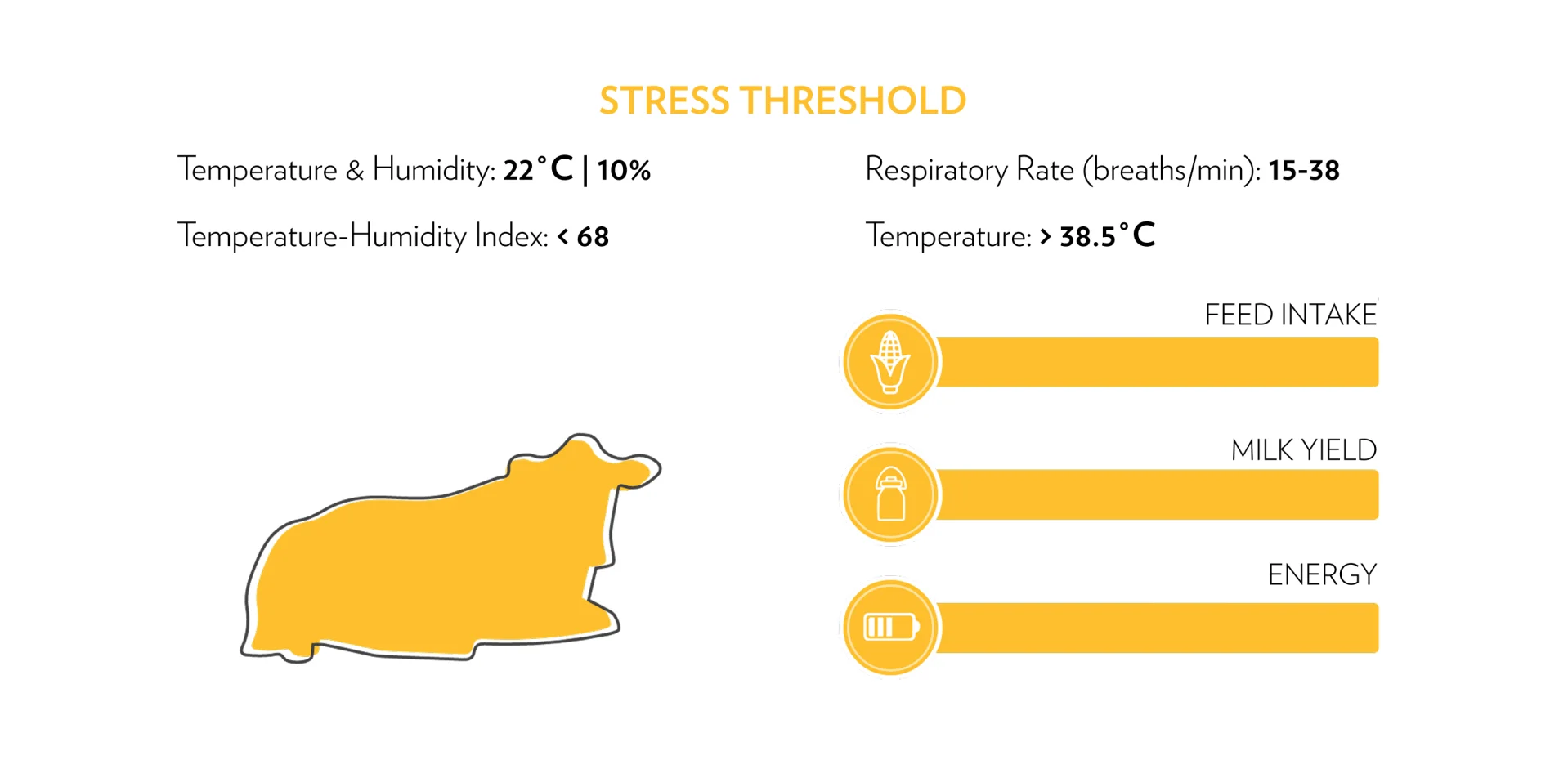
The Temperature-Humidity Index (Figure 1) is used to demonstrate the amount of heat stress in cows. At a high THI, cows struggle to efficiently get rid of heat. The increased core body temperature impairs feed intake resulting in lower component yield and poor reproductive performance. Managing your herd and facilities to minimize the negative impact of moderate to high THI is the first step.
Are your fans clean and well maintained? Dust build-up and worn belts can decrease fan capacity by 30%. Have you ensured fan placement, soakers/sprinklers are optimal? Water availability (flow rates and access) are crucial during the summer, as water intake is expected to increase by 80-90%. Cows’ behavior during heat stress changes: more time standing to efficiently get rid of heat can put a strain on hoof health. Ensuring your cows are standing on well-balanced, healthy hooves is essential. Feeding management and nutritional strategies should also be modified. Ensure feed is not heating and is formulated for the expected lower feed intake. Consider multiple feedings per day.
All stages of production can benefit from nutritional and management strategies to minimize heat stress. Recent studies have clearly shown that increased production is possible if dry cows are managed and fed to reduce the impact of high THI. Proactive farmers already have seen the negative impact of a high THI not only in milk components but also on DMI during the moment that will define the future performance of the herd: fresh cow pen! lnvesting in nutrition and management during the periods of anticipated heat stress has a high ROI.


New nutritional strategies
Essential B vitamins (the stress vitamins) improve production, cow health and reproduction during heat stress. The cow's rumen microbes produce B vitamins to meet some of her needs. Canadian research has shown that the amount of these B vitamins produced by the rumen is driven by several factors, with feed intake being a key predictor. As you have seen on your farms, feed intake is reduced during stress periods, especially heat stress. Lower feed intake results in lower B vitamin production. Meet your cows' high B vitamin demand during periods of low feed intake by supplementing your herd with rumen-protected B vitamins. It is critical to feed rumen-protected vitamins to avoid their degradation in the rumen to ensure the cow absorbs them downstream.
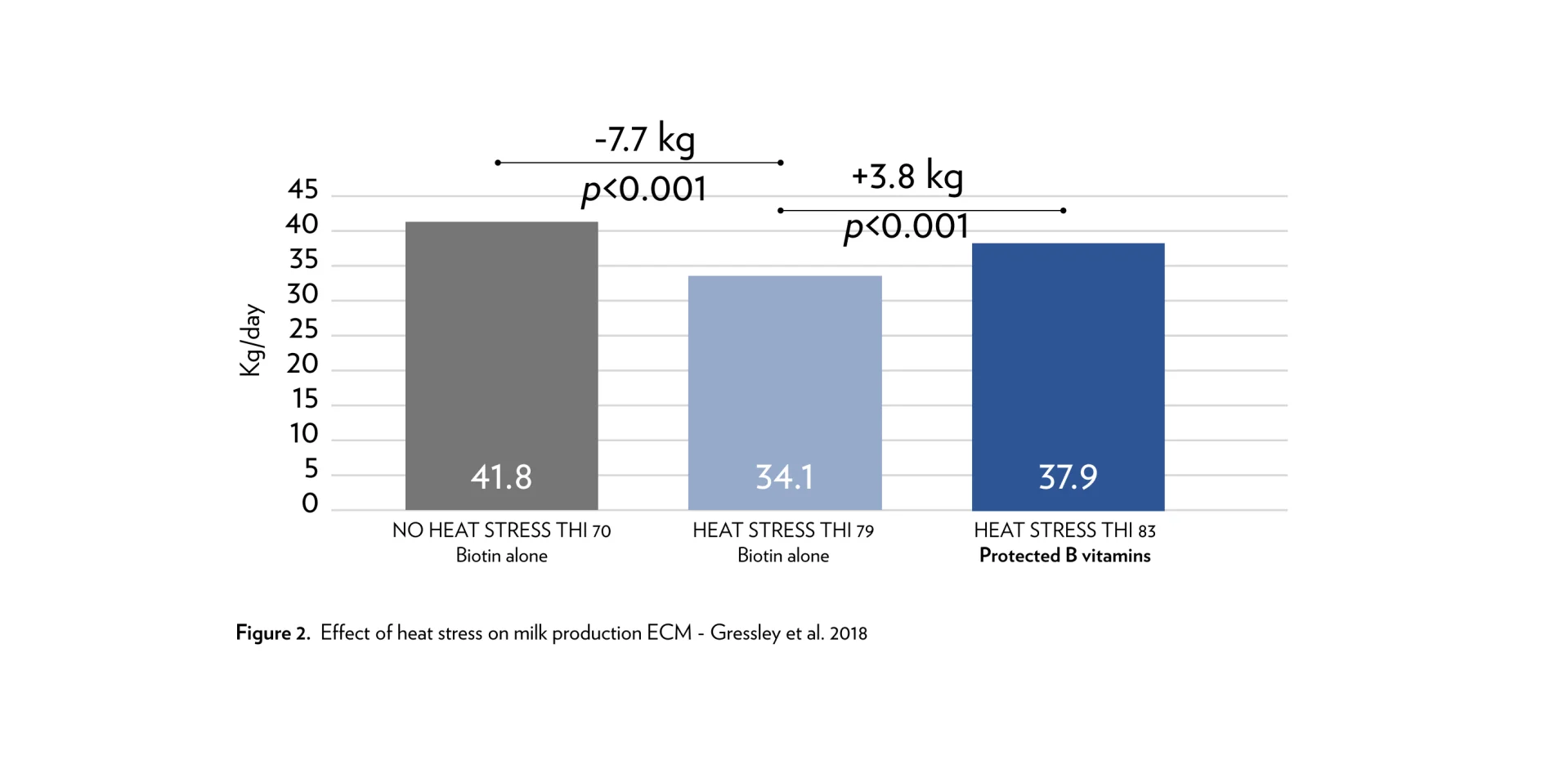
Recent research confirmed improved component yield when rumen-protected B vitamins were fed to heat stressed dairy cows. Heat stressed cows (THI of 83) fed a proprietary protected B vitamin blend for lactating cows produced 3.8 kg more energy-corrected milk (adjusted to 150 days in milk). This large response has been repeated in other trials in Ontario, California and Mexico.
Supplementing your herd with rumen-protected B vitamins, in particular during periods of stress (especially heat stress), lower feed intake or changing feeds, has been shown to improve component yield, health and reproductive performance.
Relevant resources
See all-
- Podcast
- Management
- Immunity
- Performance
- Stress
How Nutrition and Management make for Stronger Cattle Immunity
Dr. Jodi McGill explains how nutrition, management, vaccination and innate immunity can prepare calves to better withstand respiratory disease challenges. -
- Article
The Role of B Vitamins in Transition Cow Nutrition
In this interview with Dr. Lance Baumgard, explore the role of B vitamins in transition cow nutrition, including inflammation, metabolism, ketones, feed intake and stress management. -
- Podcast
- Immunity
- Performance
- Milk
- Stress
Practical Research for Better Dairy Performance
Our guests explain how three commercial dairy studies demonstrate how precision nutrition improves calf growth, transition success, milk production, and overall herd performance through targeted supplementation. -
- Podcast
- Management
- Feed efficiency
- Immunity
- Performance
- Milk
- Stress
Why Mitochondria Matter in the Modern Dairy Cow
How mitochondrial function shapes transition cow metabolism, nutrition, adaptation, and health while improving efficiency, resilience, and long-term dairy performance. -
- Article
- Stress
Expert Insights on Cow Stress | Podcast Playlist
Explore expert discussions on cow stress, including its impact on health, reproduction, gut health, and productivity. Watch RumiNation Podcast episodes with industry experts. -
- Podcast
- Management
- Performance
The Evolving Role of the Modern Dairy Nutrition Consultant
Discover how practical nutrition, trusted relationships, and data-driven decisions help dairy consultants improve herd performance, profitability, and long-term farm success. -
- Podcast
- Management
- Performance
Smart Systems Rethinking Lameness Management
Dr. Gerard Cramer explains why early lameness detection, strategic trimming, and stronger dairy teamwork are essential for healthier cows. -
- Podcast
- Management
- Immunity
- Performance
- Stress
Managing Calf Stress from Day One to Weaning
Dr. Gail Carpenter explains how early-life stress, nutrition, and management shape calf health, resilience, productivity, and profitability. -
- Podcast
- Management
- Stress
How Wildfire Smoke Impacts Calf Growth
In this episode, Dr. Juliana Ranches discusses how wildfire smoke impacts cattle health and performance, offering practical strategies producers can use today to protect herds and manage growing air quality challenges. -
- Article
- Stress
New Research Targeting Nutrients for Stress Mitigation
Modern dairy cows face an array of physiological and environmental stressors that can impair performance, health and longevity. From heat stress to the metabolic upheaval of the transition period, these challenges alter nutrient needs, compromise Immunity, and increase inflammation and oxidative stress.