- Article
- Dairy
Liver Health: A Key Driver of Reproductive and Milk Performance
Originally published in the agricultural magazine La Terre de Chez Nous.
Written by Oswal Villalobos, Agr., Ph.D., ruminant expert at Jefo.
The transition period and early lactation are particularly challenging for dairy cows because their glucose requirements for milk production, immune function, and reproduction often exceed what can be supplied by feed intake. As a result, cows mobilize large amounts of body fat, increasing the risk of ketosis and fatty liver. When the liver becomes overloaded, energy metabolism, fertility, and immune function can all be compromised – three essential pillars of overall herd performance.
The liver: a vital organ too often overlooked
The liver plays a crucial role in converting nutrients into energy, detoxifying the body, and synthesizing compounds essential for reproduction. When liver function is compromised, feed intake often declines rapidly, milk production decreases, reproductive performance suffers, and metabolic disorders become more frequent. In Canadian dairy cows, the average pregnancy rate (18%) and conception rate (40%) reflect these ongoing challenges (Denis-Robichaud et al., 2016).
Optimizing liver health through precision nutrition is therefore a key lever to improve performance and increase longevity of dairy cows.
Methionine, choline, betaine, and B vitamins: a metabolic synergy
Methionine, choline, betaine, and B-complex vitamins work synergistically to support liver and reproductive function:
- Methionine: provides methyl groups essential for protein synthesis and cellular regeneration.
- Choline: supports the export liver fat as VLDL, helping prevent fat accumulation in the liver.
- Betaine: acts as a methyl donor and osmolyte, helping protect cells against metabolic and osmotic stress.
- B vitamins (B9, B12, B6, B2): support efficient energy production, protein synthesis, and fat metabolism, thereby contributing to animal performance and overall health.
In their unprotected form, these nutrients undergo extensive ruminal degradation, which reduces their intestinal availability and overall efficacy. Microencapsulation technology enables targeted release in the intestine, ensuring optimal absorption and a sustained physiological effect. Internal studies, as well as peer-reviewed research, also show that providing these nutrients in a balanced, rumen-protected form, supports liver function, reduces the incidence of fatty liver, and improves reproductive performance.
Research-backed benefits
A meta-analysis published in the Open Journal of Animal Science demonstrated rumen-protected B vitamins and choline supplementation significantly improves liver health and reproductive performance in transition cow:
- +30% pregnancy rate at 100 days in milk (DIM)
- +13% conception rate
- -22% mastitis and -27% metritis
- -40% cases of ketosis (BHBA > 1.2 mmol/L)
Nutrigenomic analyses also revealed increased expression of key genes associated with improved oocyte quality and earlier ovulation (RGS2, INHBA, FOLR2), while SELL, TRD, IL1B, MUC5B were linked to improved embryo survival.
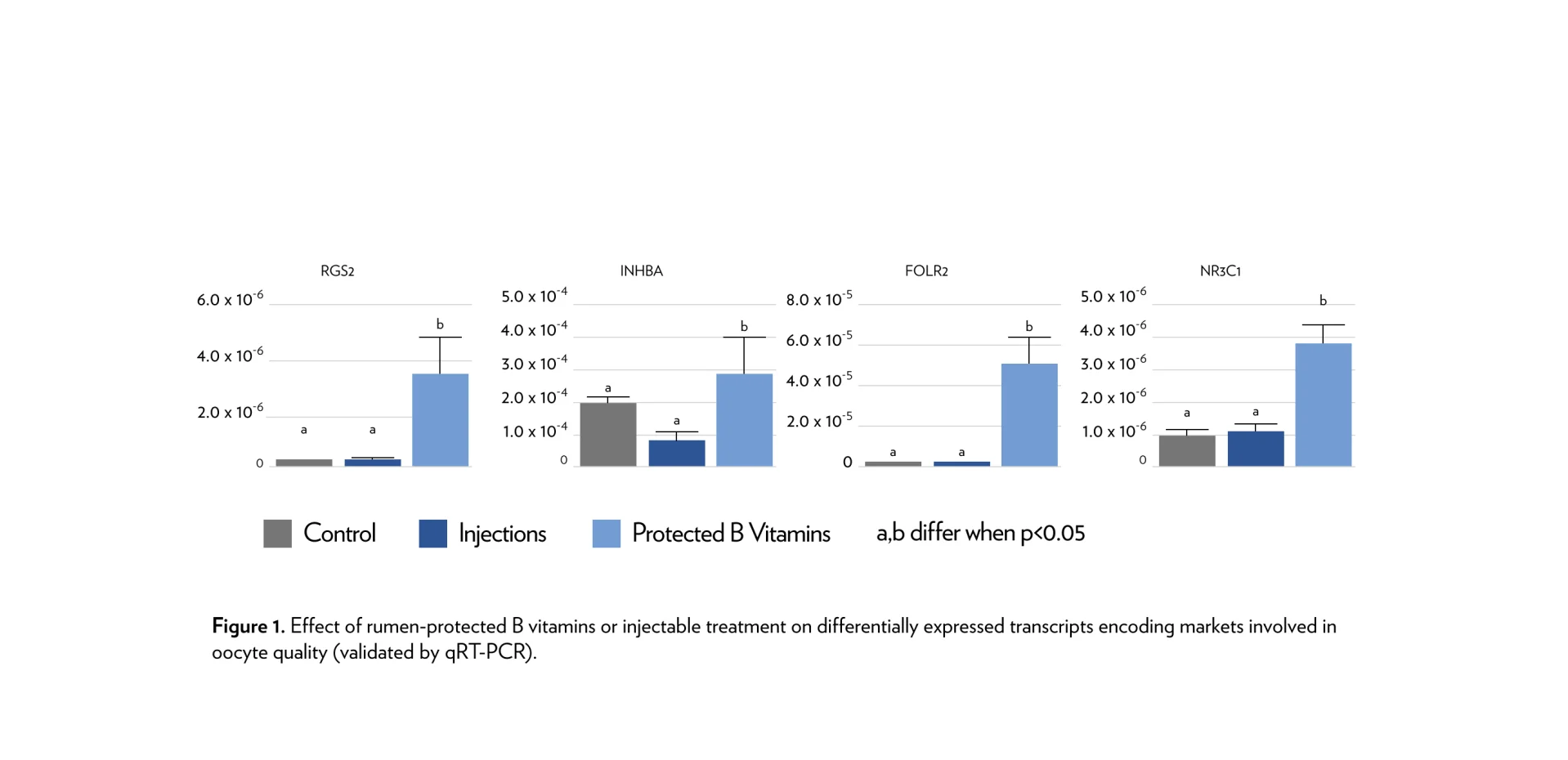
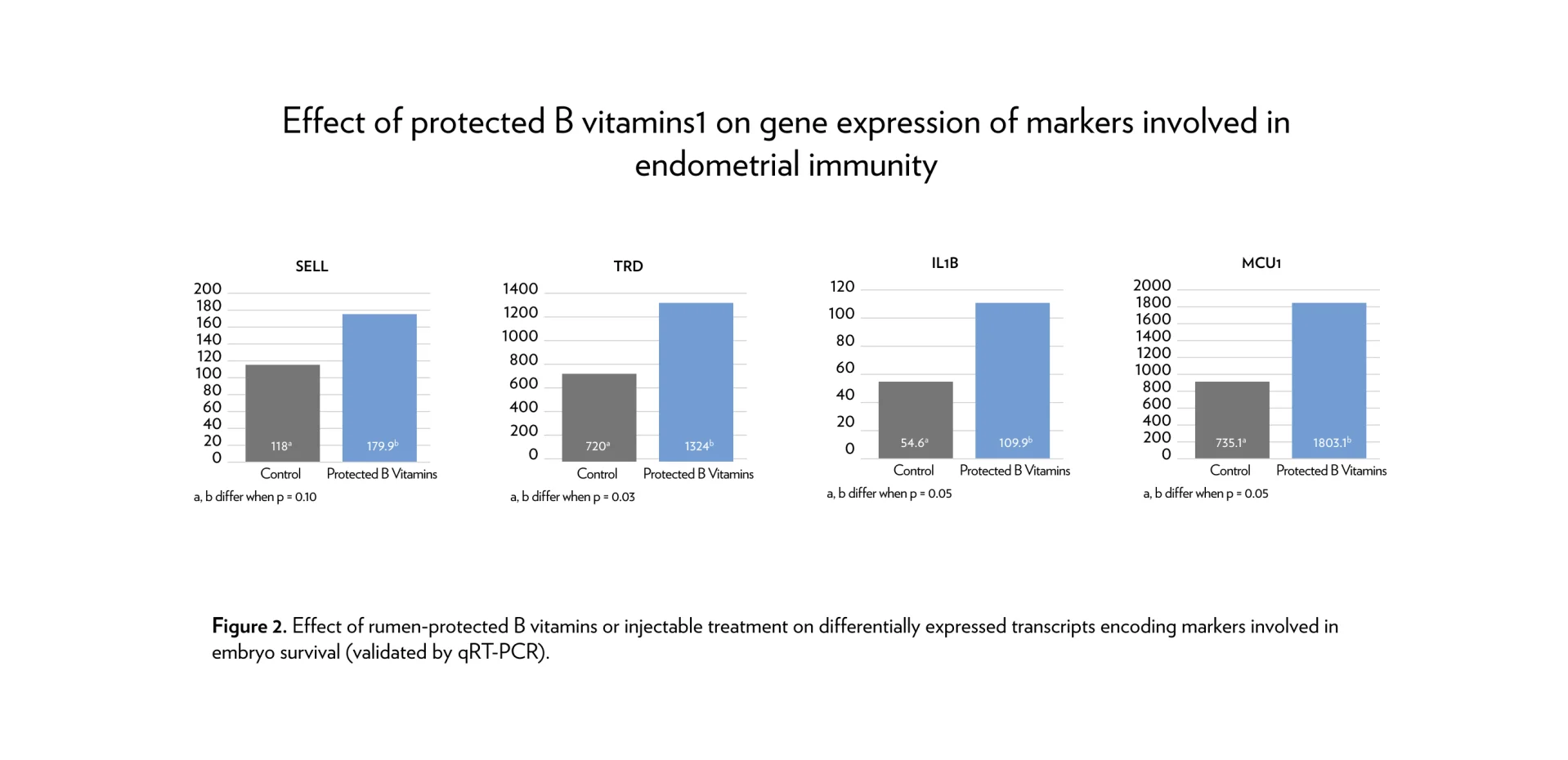
These results confirm that a targeted nutritional approach can influence the expression of reproduction-related genes, turning cellular health into measurable performance.
A direct impact on herd profitability and well-being
A healthy liver supports efficient energy mobilization, milk production, and fertility. Beyond performance gains, this approach also improves animal welfare and farm profitability. Based on economic estimates, a 15-20% improvement in pregnancy rate could represent an additional 230 to 310 CAD per cow in profitability, depending on production conditions (values updated to 2025).
Liver health is therefore more than metabolic issue: it is a key lever for efficient reproduction, sustained lactation, and a more resilient herd.

Want to learn more from dairy production experts?
Gain research insights, practical knowledge, and real-world strategies with the new season of RumiNation, the podcast from Jefo Nutrition featuring conversations with industry leaders.
The 7th season launches on April 28!
Our products
See all-
Bestseller
MET 55™
Rumen protected methionine for dairy cows -
Bestseller
Eazystim
Fermentation by-products on carrier -
Bestseller
JEFO LYS 30™
Rumen protected lysine for dairy cows -
Bestseller
TRANSITION VB™
Vitamin Supplement for Dairy Cows -
Bestseller
Eazystim
Fermentation by-products on carrier -
Bestseller
LACTATION VB™
Vitamin Supplement for Dairy Cows -
Bestseller

Jefo SECURE LYS™
Microencapsulated Lysine for animal nutrition -
Bestseller
Jefo SECURE LACTATION™
Vitamin premix for dairy cows -
Bestseller

Jefo SECURE TRANSITION™
Vitamin mix for ruminants -
Bestseller
JEFO DAIRY FAT 99%™
Palm Palmitic Acid (C16:0)Energy Supplement for Dairy Cattle, Sheep and Goat
Relevant resources
See all-
- Podcast
- Management
- Immunity
- Performance
- Stress
How Nutrition and Management make for Stronger Cattle Immunity
Dr. Jodi McGill explains how nutrition, management, vaccination and innate immunity can prepare calves to better withstand respiratory disease challenges. -
- Article
The Role of B Vitamins in Transition Cow Nutrition
In this interview with Dr. Lance Baumgard, explore the role of B vitamins in transition cow nutrition, including inflammation, metabolism, ketones, feed intake and stress management. -
- Podcast
- Immunity
- Performance
- Milk
- Stress
Practical Research for Better Dairy Performance
Our guests explain how three commercial dairy studies demonstrate how precision nutrition improves calf growth, transition success, milk production, and overall herd performance through targeted supplementation. -
- Podcast
- Management
- Feed efficiency
- Immunity
- Performance
- Milk
- Stress
Why Mitochondria Matter in the Modern Dairy Cow
How mitochondrial function shapes transition cow metabolism, nutrition, adaptation, and health while improving efficiency, resilience, and long-term dairy performance. -
- Article
- Stress
Expert Insights on Cow Stress | Podcast Playlist
Explore expert discussions on cow stress, including its impact on health, reproduction, gut health, and productivity. Watch RumiNation Podcast episodes with industry experts. -
- Podcast
- Management
- Performance
The Evolving Role of the Modern Dairy Nutrition Consultant
Discover how practical nutrition, trusted relationships, and data-driven decisions help dairy consultants improve herd performance, profitability, and long-term farm success. -
- Podcast
- Management
- Performance
Smart Systems Rethinking Lameness Management
Dr. Gerard Cramer explains why early lameness detection, strategic trimming, and stronger dairy teamwork are essential for healthier cows. -
- Podcast
- Management
- Immunity
- Performance
- Stress
Managing Calf Stress from Day One to Weaning
Dr. Gail Carpenter explains how early-life stress, nutrition, and management shape calf health, resilience, productivity, and profitability. -
- Podcast
- Management
- Stress
How Wildfire Smoke Impacts Calf Growth
In this episode, Dr. Juliana Ranches discusses how wildfire smoke impacts cattle health and performance, offering practical strategies producers can use today to protect herds and manage growing air quality challenges. -
- Article
- Stress
New Research Targeting Nutrients for Stress Mitigation
Modern dairy cows face an array of physiological and environmental stressors that can impair performance, health and longevity. From heat stress to the metabolic upheaval of the transition period, these challenges alter nutrient needs, compromise Immunity, and increase inflammation and oxidative stress.