- Article
- Swine
- Sustainability
- Feed efficiency
- Pathogens
Cutting Zinc, Not Performance, for New Regulations
This article was originally published in the Fall 2025 edition of the Canadian Hog Journal and authored by Olufemi Babatunde, Technical Specialist, Swine and Poultry, at Jefo Nutrition.
The Canadian pork industry is preparing for a major shift. By 2027, new regulations will require reduced zinc levels in pig diets to minimize environmental accumulation and protect soil quality. This follows a global trend already seen in the European Union, where pharmacological zinc oxide (ZnO) use has been heavily restricted due to environmental and antimicrobial resistance concerns. For Canadian producers and nutritionists, this presents both a challenge and an opportunity. The question remains on how to maintain nursery pig health and performance without the traditional high doses of zinc oxide that have long been a cornerstone of post-weaning nutrition.
Zinc’s environmental impact
For decades, zinc oxide at therapeutic doses (between 2,000 and 3,000 parts per million per total zinc) has been a reliable tool to reduce post-weaning diarrhea and improve growth in nursery pigs. Zinc supports enzyme function, immunity and intestinal integrity, helping young pigs transition from milk to solid feed. Zinc has also been known to prevent the adhesion of pathogenic bacteria like E. coli to the intestinal mucosa (Figure 1). However, the problem isn’t zinc itself; it is how much of it gets wasted.
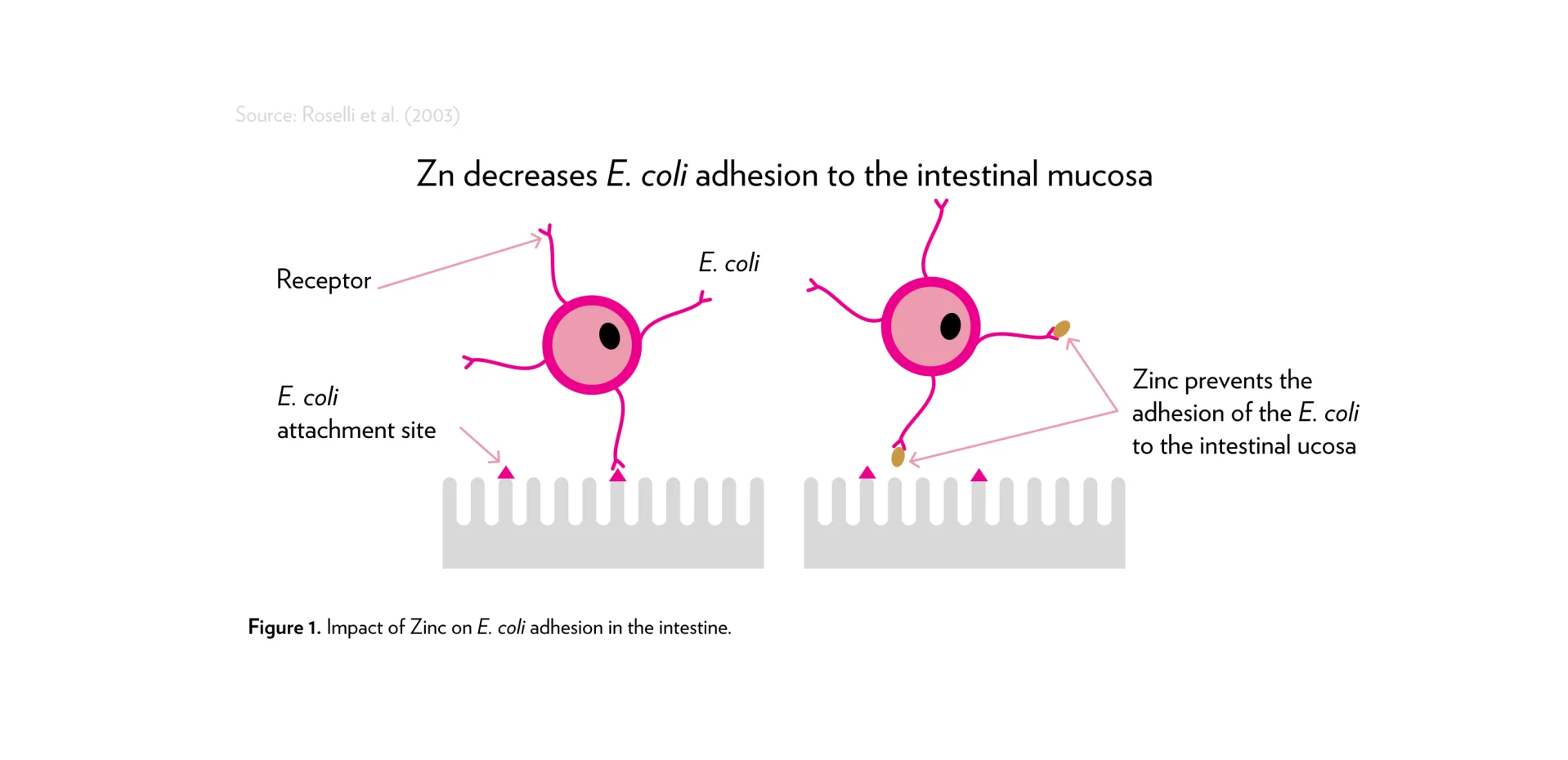
Most of the dietary zinc from traditional zinc oxide is poorly absorbed and excreted in manure, contributing to zinc buildup in agricultural soils. Over time, this environmental burden has become a global issue that has to be addressed. While the exact federal limit has not yet been finalized, upcoming Canadian regulations are expected to reduce zinc inclusion to roughly between 150 and 350 parts per million of total zinc, much lower than what is currently used in nursery diets. This shift will require the industry to rethink how zinc is formulated, delivered and utilized within the broader nursery nutrition program.
Microencapsulation for more responsible use
One promising strategy is microencapsulation, which allows zinc oxide to be released more efficiently where it’s needed most in the small intestine, rather than being lost in the stomach or excreted unused. In addition, high levels of free zinc oxide can impair a pig’s ability to keep its gastric pH low, due to its high acid binding capacity, thereby resulting in reduced protein digestion or increased risk of bacterial infection.
Microencapsulation protects the mineral from early dissociation in the stomach’s acidic environment, ensuring a more gradual and targeted release. This technology can maintain or even enhance efficacy at a fraction of the traditional zinc levels, drastically reducing waste.
In a recent nursery pig trial conducted by Jefo, 480 piglets were used to compare traditional high-dose zinc oxide with varying levels of Jefo’s protected ZnO [P(ZnO)], a microencapsulated form of zinc oxide.
Trial design
Treatments
- Control: 3,000 ppm (Phase 1) and 1,500 ppm (Phase 2) of free ZnO.
- Jefo P(ZnO): 400, 600, or 800 ppm across all phases. At 40% of Zn in the product, this corresponds to 160, 240, and 320 ppm of Zn, respectively.
Duration
- 26 to 61 days of age.
Metrics
- Growth performance, feed efficiency, fecal zinc, intestinal health (ZO-1 gene expression), and feed cost per kg of gain.
Key findings
Comparable growth
- Pigs fed microencapsulated ZnO achieved similar or improved body weight and feed conversion compared to those fed pharmacological doses of free ZnO (Figure 2).
Reduced zinc excretion
- Fecal zinc output dropped by up to 75% (Figure 3), indicating a major environmental benefit.
Enhanced gut integrity
- Expression of Zonula Occludens-1 (a key tight-junction protein) increased (Figure 3), indicating stronger intestinal barriers and improved gut health.
Lower feed cost per kg gain
- Optimized nutrient use and better feed efficiency translated into real economic savings.
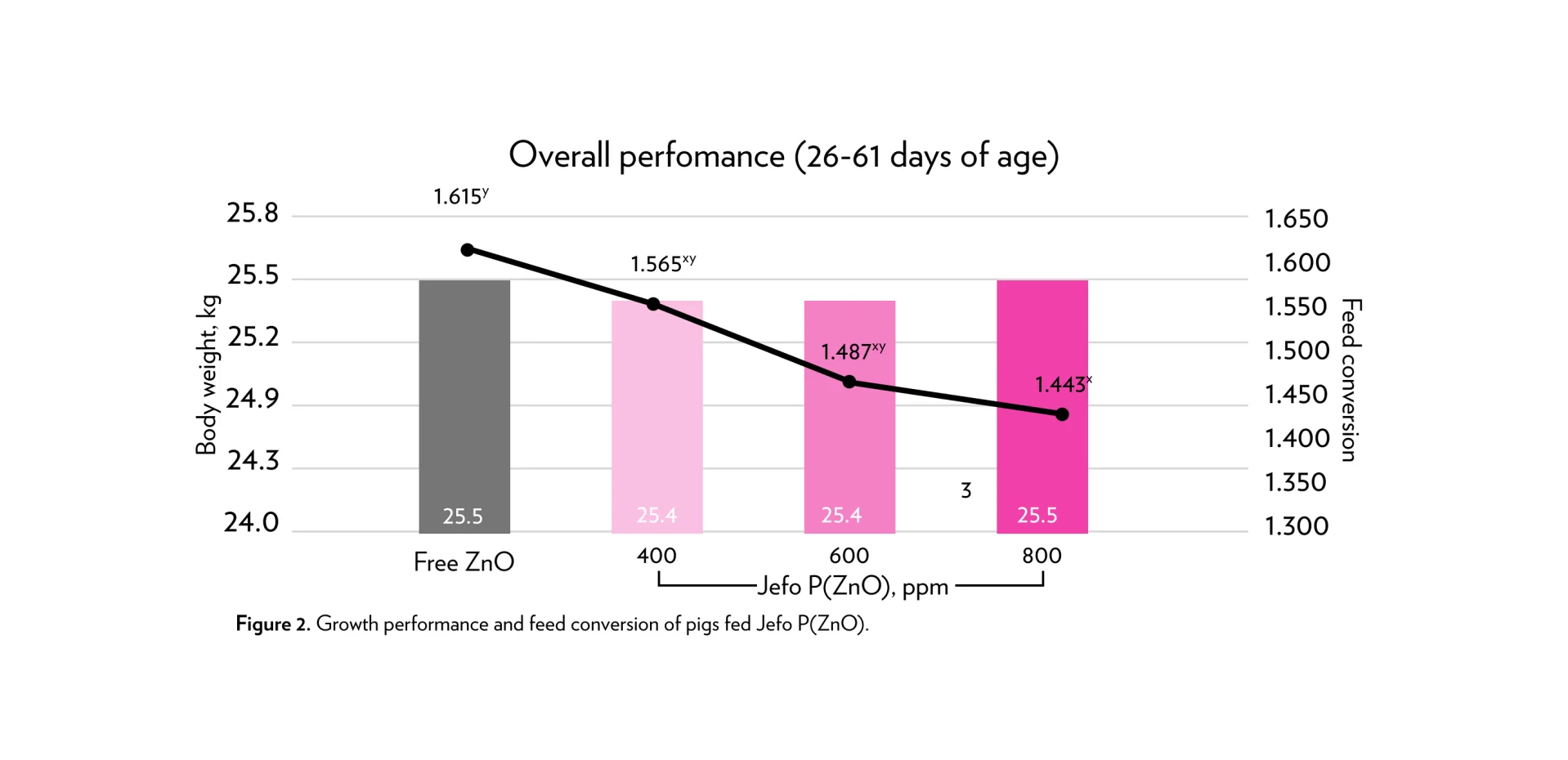
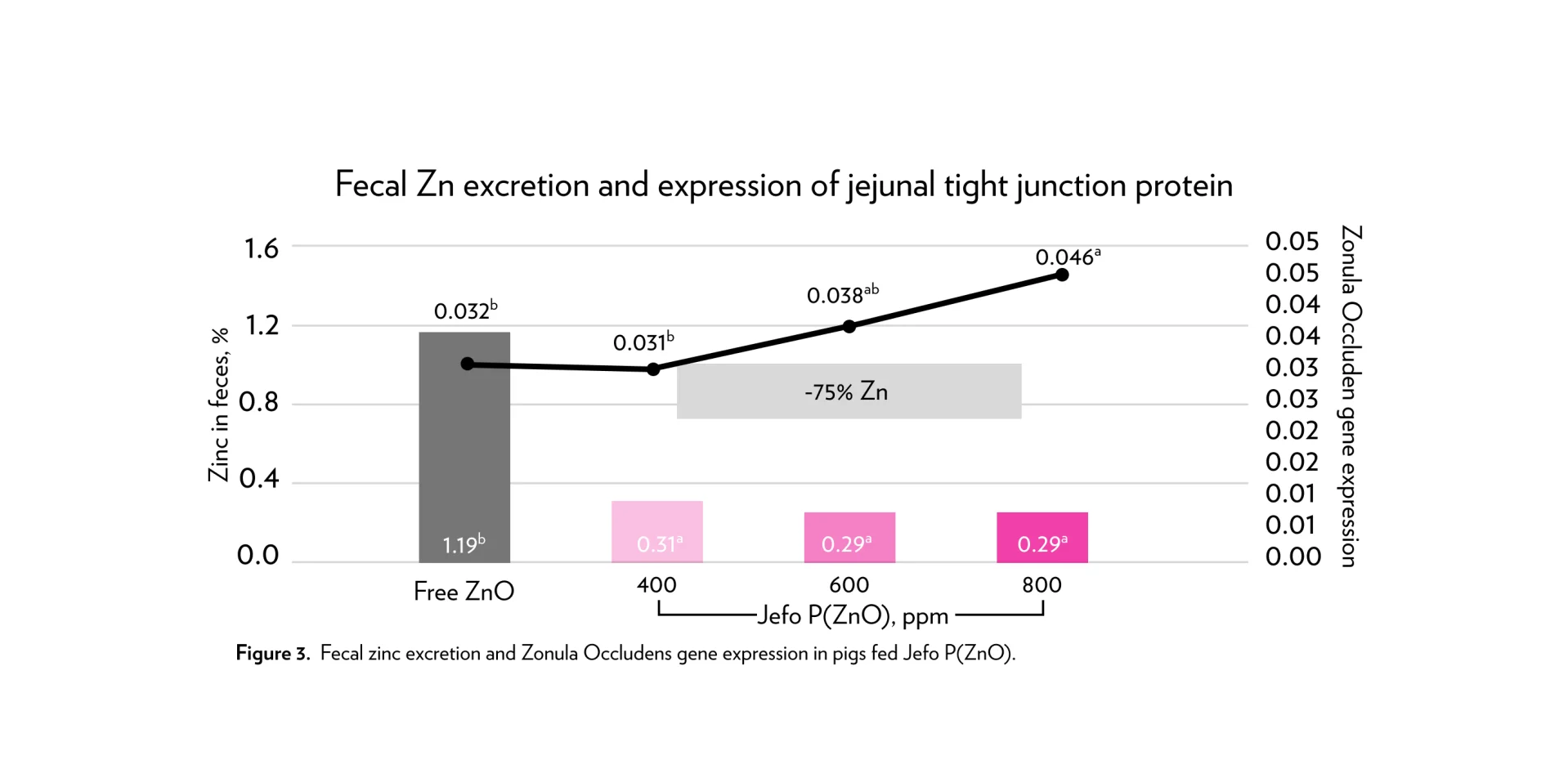
Together, these results demonstrate that effective zinc nutrition doesn’t have to mean excessive zinc inclusion. With improved bioavailability and intestinal delivery, Jefo P(ZnO) allows producers to meet both performance and sustainability goals.
Complementary strategies for a successful transition
While smarter zinc sources are a major part of the solution, successful adaptation to lower zinc levels will also depend on strong nutritional and management programs that reduce post-weaning stress and support gut resilience. These include:
Optimizing weaning management
- Smooth transitions ensure piglets have early exposure to solid feed before weaning to encourage intake.
- Maintaining optimal pen temperature (28 to 30 degrees Celsius) and clean, dry conditions help to reduce infection pressure while ensuring thermal comfort and hygiene.
- Proper space allowance prevents overcrowding, which can increase stress and pathogen transmission.
Supporting gut health through diet
- Use of functional feed additives like enzymes (protease and xylanase) improves nutrient digestibility and reduces undigested protein in the hindgut, lowering the substrate for pathogenic bacteria.
- Organic acids and essential oils help lower gut pH, enhance microbial balance, and improve nutrient absorption.
- Yeast and probiotics could help establish beneficial microflora, reduce pathogen colonization, and modulate immune response.
- Proper fiber management allows incorporation of moderate levels of functional fibers to stimulate gut motility and microbial diversity.
Protein and amino acid optimization
- Avoid excessive crude protein in diets by lowering dietary CP and supplementing with crystalline amino acids. This helps reduce nitrogen and zinc interactions in the gut, improving overall nutrient efficiency.
- A balanced amino acid profile with adequate levels of lysine, threonine, and tryptophan is critical to immune competence and gut repair during weaning stress.
Health and biosecurity programs
- Effective vaccination and medication protocols help maintain strong disease prevention programs to minimize enteric challenges.
- Ensure water quality by checking for mineral content and microbial load. This is because poor water quality can worsen gut issues and interfere with mineral absorption.
A combination of these strategies with microencapsulated zinc can provide a holistic approach to maintaining piglet health and performance under reduced-zinc programs.
Preparing for 2027
With fewer than two years before the new regulation takes effect, it is time to start adapting nursery feeding programs. Transitioning gradually gives producers the flexibility to test and optimize formulations before limits become mandatory. Here are a few practical steps to consider:
Start early with phase reductions
- Begin lowering zinc oxide inclusion across nursery phases and monitor piglet response. Use performance and health data to refine your approach.
Use smarter sources of zinc
- Incorporate microencapsulated or highly bioavailable zinc sources to maintain gut health and growth with minimal inclusion.
Strengthen your overall gut health strategy
- Complement reduced zinc levels with proven additives such as protease, xylanase, organic acids, essential oils, fibre and probiotics to support digestion and intestinal resilience.
Track environmental and performance metrics
- Monitor manure zinc levels and feed conversion to document compliance and sustainability benefits.
By approaching zinc reduction proactively, producers can avoid last-minute reformulation challenges while demonstrating leadership in environmental stewardship.
Conclusion
The 2027 regulation marks a pivotal shift toward more sustainable hog production in Canada. While it may seem daunting to move away from the comfort of therapeutic zinc, research and on-farm trials show that performance doesn’t have to be sacrificed.
Through innovative technologies like microencapsulation, combined with sound management and nutritional strategies, it is possible to achieve equal or better piglet health outcomes while protecting the environment and reducing costs.
This is an opportunity for our industry to show that science-based nutrition and sustainability can go hand-in-hand.
Relevant resources
See all-
- Article
- Stress
Supplementing Sows Can Combat Heat Stress
Learn how nutritional supplementation, enzymes and liquid additives help reduce heat stress in sows, support reproduction and maintain performance during summer. -
- News
BELFEED® obtains a European authorisation for gestating sows
JEFO is pleased to announce the extension of BELFEED®'s European authorization for use in gestating sows. This new approval reinforces BELFEED®'s position as a reference xylanase for pig and poultry for optimising the energy recovery of feed. -
- Article
- Pathogens
- Gut integrity
High Protease Supplementation: Exploring the Boundaries
Discover how high protease supplementation improves protein digestion, gut health, microbial balance, and resilience in livestock production, including poultry and swine. -
- Article
- Sustainability
- Feed efficiency
- Pathogens
Cutting Zinc, Not Performance, for New Regulations
Learn how to maintain nursery pig health and performance without the traditional high doses of zinc oxide that have long been a cornerstone of post-weaning nutrition. -
- Article
- Sustainability
- Feed efficiency
- Ingredient Stability
- Pathogens
Synchronized Precision Delivery of Nutrients for Gut Harmony and Sustainability
For decades, animal nutrition strategies have focused on boosting productivity by supplementing diets with high-quality ingredients. While this approach has delivered performance gains, it has also exposed a critical vulnerability: the mismatch between digestion and absorption. -
- Article
- Reproduction
Improving Sow Urogenital Health with Protected Organic Acids
As antibiotics face growing restrictions, innovative strategies are needed to address reproductive health challenges. The use of protected products such as Jefo’s protected organic acids – Jefo P(OA) - offers a science-backed, practical solution to promote urogenital health in sows while improving productivity and profitability. -
- Testimonials
Customer Story | LPF Farm (Thailand)
LPF Farm highlights the benefits of Jefo P(OA+EO) in replacing antibiotics and improving swine production performance. -
- Testimonials
Customer Story | CK and SON (Thailand)
CK and SON farm shares their successful experience using Jefo P(OA+EO) to replace antibiotics and improve sow and piglet performance during lactation. -
- Podcast
Breaking Barriers to Mental Health in Farming Communities
Chris interviews Dr. Heather Schlesser, who shares insights on farmer stress, mental health barriers, Telehealth solutions, and the importance of planning effective farm transitions. -
- Article
Clean Water, Healthy Animals: 5 Easy Steps to Sanitize Your Water Lines
Boost animal health and performance with these 5 easy water line cleaning steps. Essential for biosecurity and effective treatments.


Our products
See all-
Bestseller
TETRACID 500™
Acidifier for swine feeding -
Bestseller
PROMEGA-3™
Fat supplement for sows and boars feeds -
Bestseller
Multinat EZMIX™
Fermentation products supplement for swine and poultry feeds -
Bestseller
PORCINAT+™
Acidifier and flavouring agent for swine feed -
Bestseller
Porcinat MEGAPRO™
Energy and vitamin E supplement for swine feed -
Bestseller
PORCINAT P™
Acidifier and flavouring agent for swine feed -
Bestseller
Multinat GROW-PRO™
Fermentation product for poultry and swine -
Bestseller
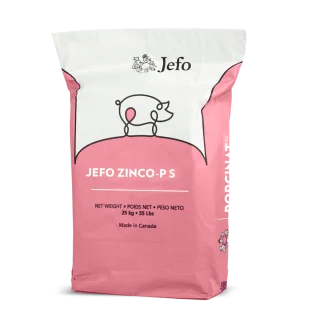
JEFO ZINCO-P S™
Zinc supplement for swine feeds -
Bestseller
PORCINAT+™
Acidifier and flavouring agent for swine feed -
Bestseller
VIT-AL™
Vitamin supplement to be added to the drinking water for chickens (laying hens and broilers), turkeys and swine