- Article
- Poultry
- Swine
- Pathogens
- Gut integrity
High Protease Supplementation: Exploring the Boundaries
Originally published in Asian Agribiz and authored by Glenmer Tactacan, Akaradet Seemacharoensri, Danielle Marie Estacio, and Derek Detzler, Technical Services team members at Jefo Nutrition.
Proteases: from digestion to gut health
Proteases have a long and proven history in livestock feeding strategies. Traditionally, they have been valued for their ability to release more nutrients from the diet, breaking down complex proteins into absorbable amino acids and peptides and thereby improving feed efficiency and animal performance. For many years, this core nutritional benefit alone secured their role in feed formulation.
More recent research, however, has revealed that the impact of proteases reaches well beyond digestion. When supplemented at higher levels, they engage directly with the gut ecosystem in ways that influence microbial balance, gut integrity, and the animal’s ability to cope with stress. This expanded understanding marks a shift from viewing proteases solely as digestibility enhancers to recognizing them as multifunctional tools for gut health management.
Making it harder for pathogens to thrive
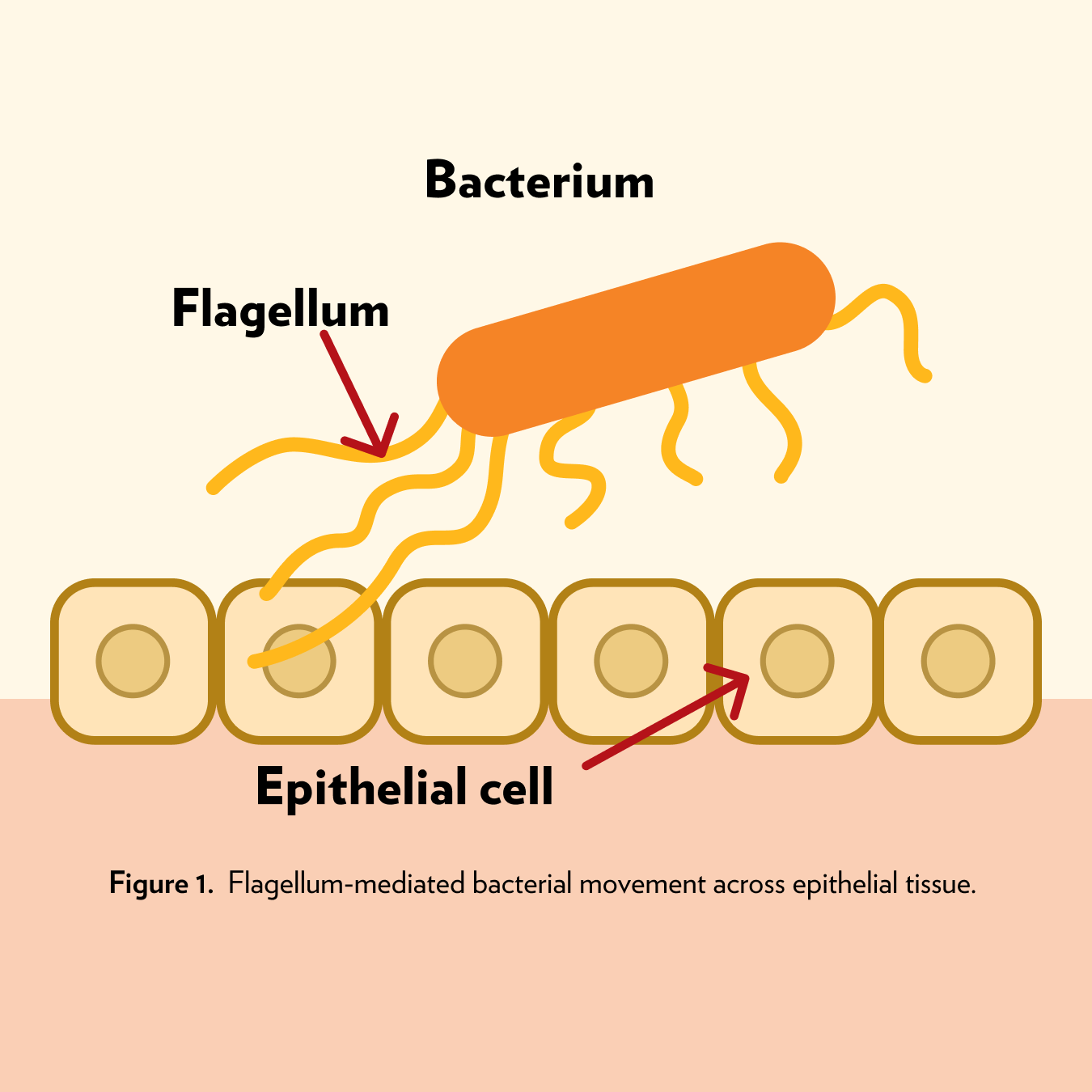
Pathogens use specialized protein structures that enable them to move through the gut and attach to intestinal tissues.
These include flagella and fimbriae, which can be targeted by proteases. Flagella, for example, function like whips, propelling bacteria through the gut (Figure 1). By degrading these structures, proteases limit bacterial mobility and reduce the inflammation triggered when the immune system detects them.
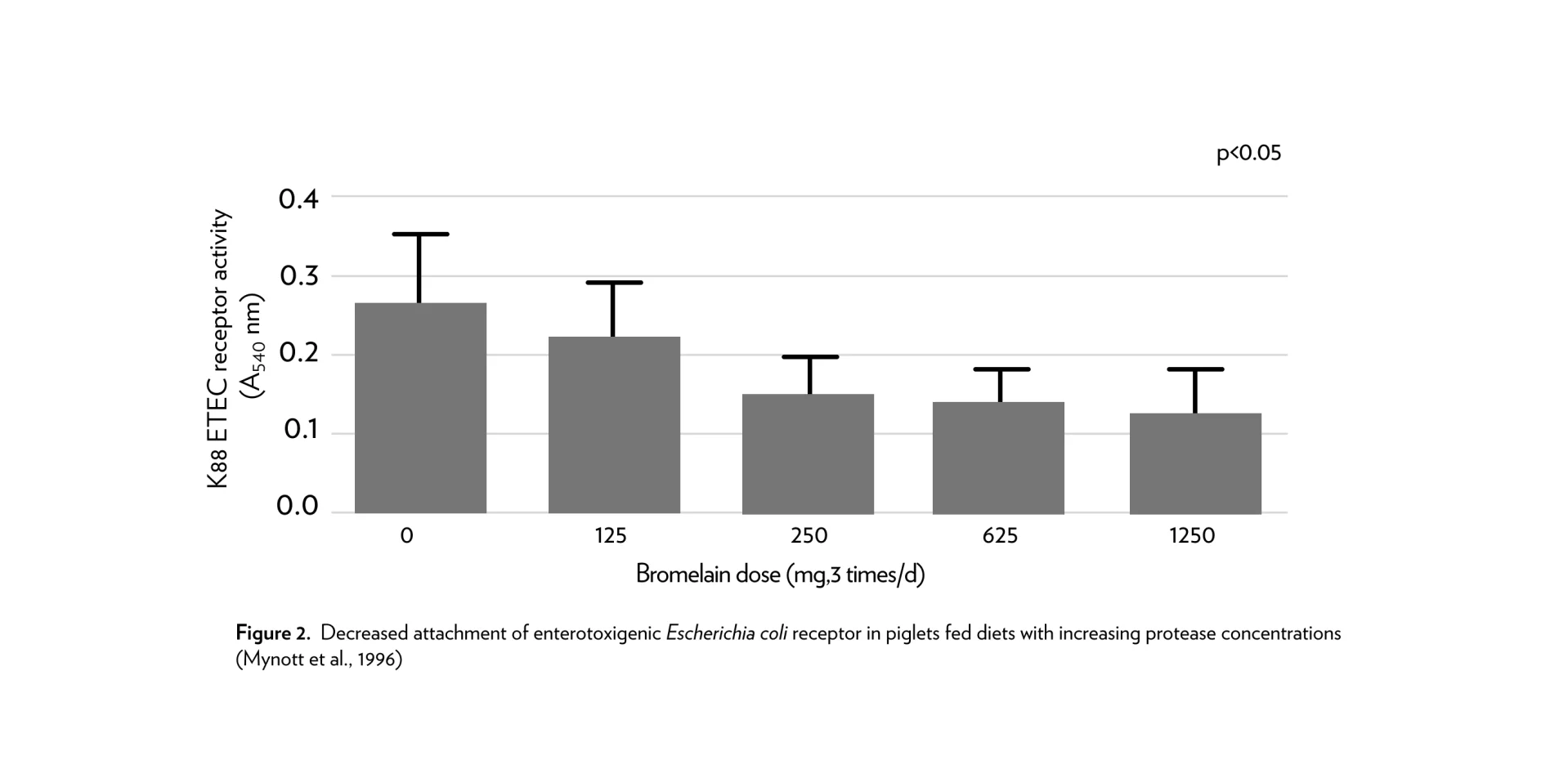
Similarly, many strains of Escherichia coli rely on fimbriae to latch onto the intestinal wall. High-dose protease has been shown to disrupt these adhesive structures, reducing the pathogen’s ability to colonize the gut and establish infection (Figure 2). In practice, this translates into fewer cases of diarrhea in young animals and less damage from gut pathogens in both poultry and swine.
Pathogens also protect themselves by forming biofilms, dense, sticky protein matrices that resist immune defenses. Proteases can degrade this protective layer, exposing bacteria that might otherwise be very difficult to eliminate. By dismantling these defenses, proteases help tilt the balance of power in the gut away from harmful organisms and in favor of the host. Pathogens also protect themselves by forming biofilms, dense, sticky protein matrices that resist immune defenses. Proteases can degrade this protective layer, exposing bacteria that might otherwise be very difficult to eliminate. By dismantling these defenses, proteases help tilt the balance of power in the gut away from harmful organisms and in favor of the host.
Reducing harmful fermentation in the hindgut
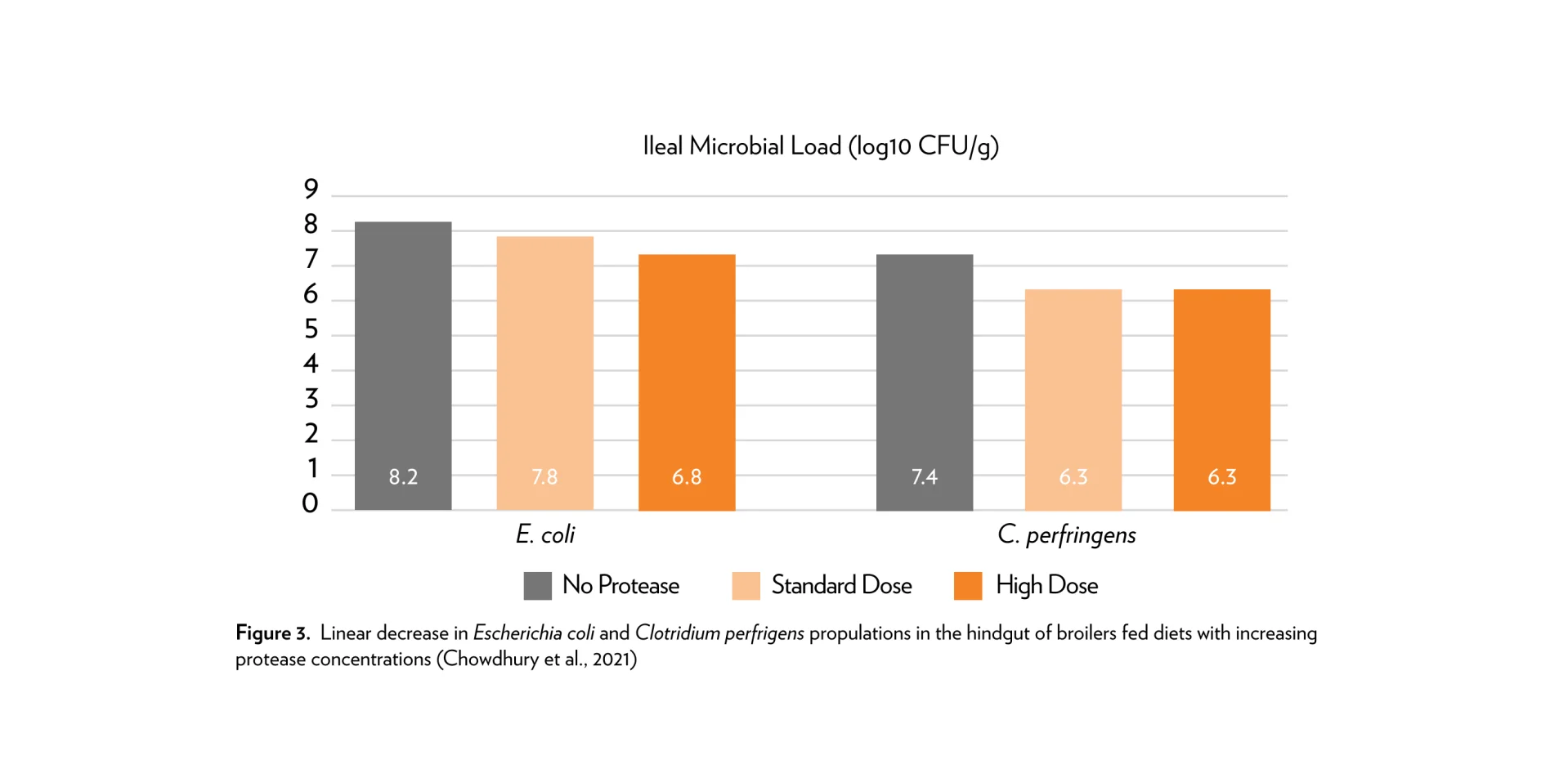
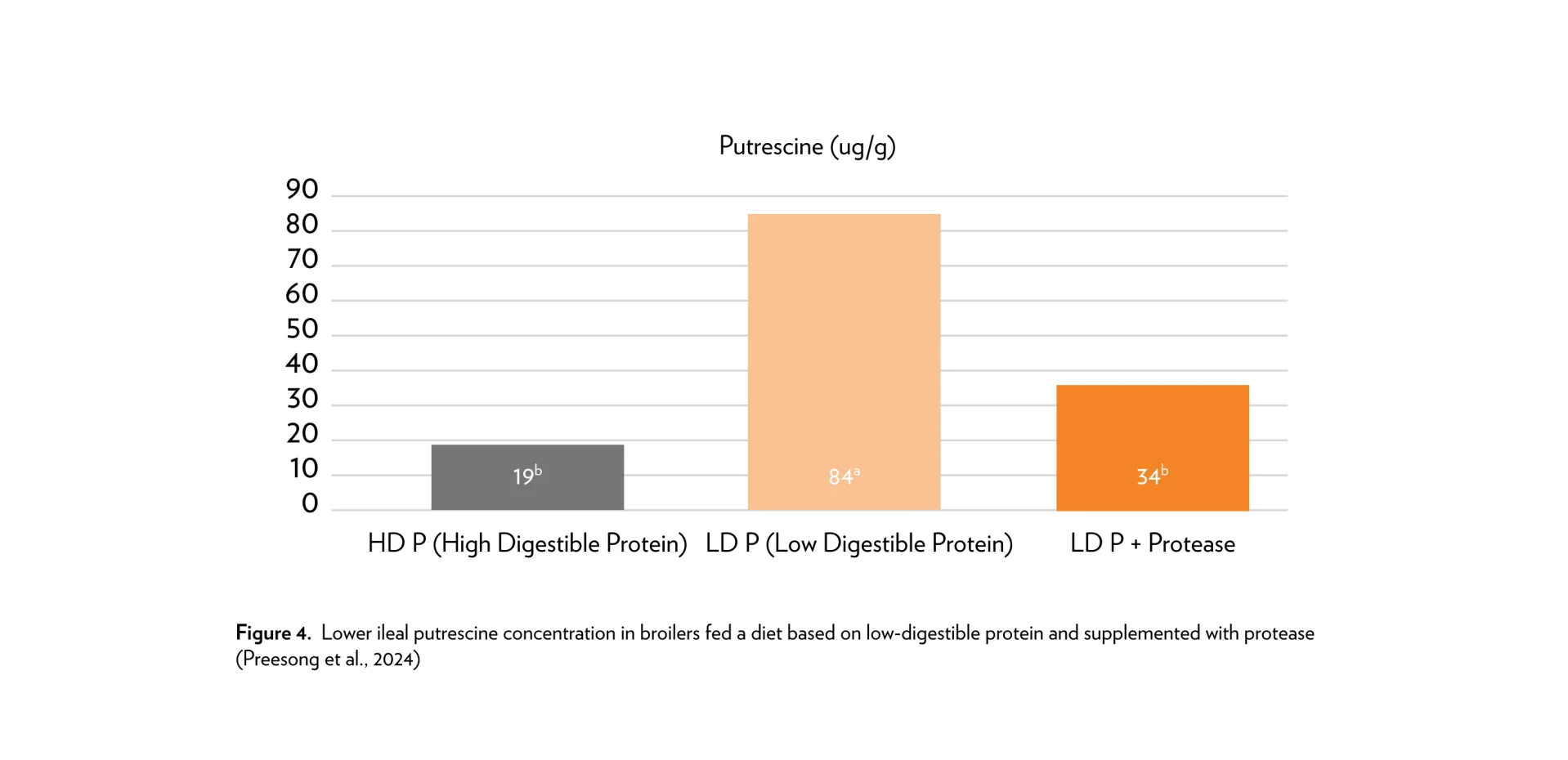
While proteins are meant to be digested and absorbed in the small intestine, undigested protein often flows into the hindgut. There, it fuels proteolytic bacteria that break it down through fermentation, generating a range of toxic by-products including ammonia, amines, phenols, and indoles. These compounds impair gut function, trigger inflammation, and reduce animal performance. High-dose proteases reduce this problem by improving protein digestion earlier in the digestive tract. With less substrate available in the hindgut, harmful proteolytic microbes such as Escherichia coli and Clostridium perfringens lose their competitive advantage (Figure 3). As their populations decline, toxic fermentation decreases and levels of detrimental metabolites drop (Figure 4). This reshaped microbial environment supports better gut function under stress, promotes nutrient absorption, and improves the overall balance of the microbiome.
Supporting the intestinal barrier
The gut is far more than a digestive organ; it serves as a critical barrier that shields animals from pathogens, toxins, and other stressors. A key part of this defense is the intestinal mucus layer, which functions both as a protective shield and as a nutrient reservoir supporting beneficial microbes. Protease supplementation has been shown to stimulate the production of thicker, more resilient mucus, reinforcing these defenses while also conserving nutrients. As the mucus layer is naturally shed and renewed, the proteins it contains, which are rich in amino acids such as threonine and serine, are reabsorbed, allowing animals to recycle valuable resources and maintain performance even under challenging conditions.
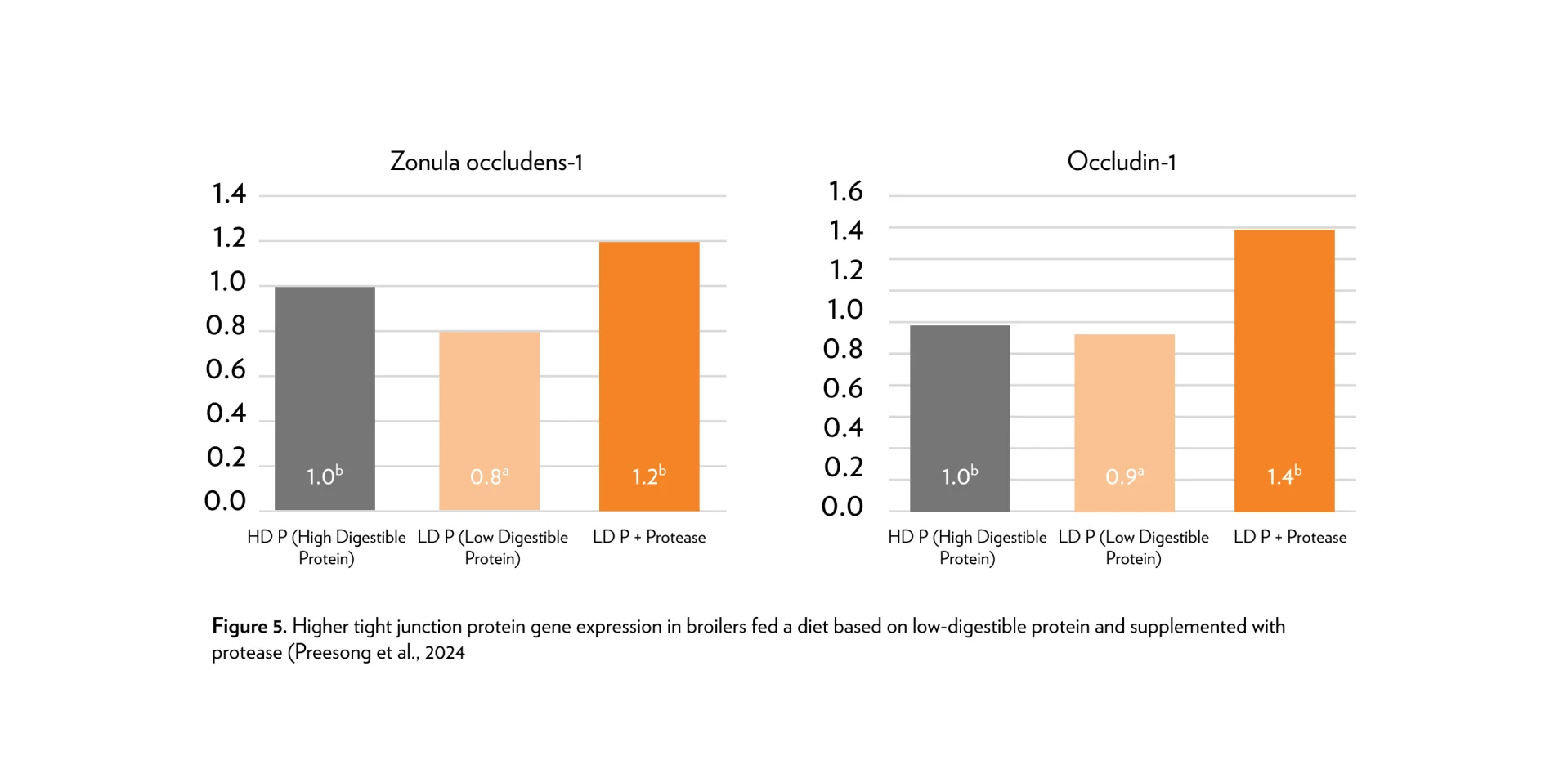
Beyond improving mucus quality, proteases also strengthen the gut’s cellular barrier. Research indicates that supplementation supports tighter connections between intestinal cells through the upregulation of tight junction proteins (Figure 5). By enhancing these molecular “seals,” proteases help prevent the development of “leaky gut,” in which pathogens or toxins cross into circulation. Together, stronger mucus defenses and reinforced tight junctions protect gut integrity, reduce the risk of systemic inflammation, and contribute directly to healthier, more resilient animals.
Moving forward
The understanding of protease function has shifted dramatically in recent years. Once seen as purely nutritional tools, proteases are now recognized as multifunctional allies that promote digestion, support gut health, and buffer animals against the stresses of modern production. The concept of “super-dosing” proteases, supplementing at levels higher than those traditionally used for digestion, reflects this broader role. At these higher levels, proteases reach beyond the intestine’s nutrient absorption pathways and directly impact the microbial and immunological environment of the animal. As research continues to map out the dose-dependent effects of proteases in different species, precision application will be the next frontier. Producers and nutritionists can expect more tailored recommendations that maximize both efficiency and gut health outcomes.
Our products
See all-
Bestseller
SALOX 100™
Vitamin D3 liquid supplement for the drinking water of poultry and swine -
Bestseller
Multinat EZMIX™
Fermentation products supplement for swine and poultry feeds -
Bestseller
Multinat P-GROW 125™
Fermentation product supplement for poultry feeds -
Bestseller
VIT-AL™
Vitamin supplement to be added to the drinking water for chickens (laying hens and broilers), turkeys and swine -
Bestseller
POULTRYGROW 250™
Enzyme supplement for poultry feeds -
Bestseller
POULTRYGROW 250™
Fermentation product for poultry feeds -
Bestseller
Multinat GROW-PRO™
Fermentation product for poultry and swine -
Bestseller
FORMULA-HP™
Vitamin A, D3 & E premix for poultry and swine -
Bestseller
Enzynat PRO 125™
Enzyme supplement for poultry and swine feeds -
Bestseller
GALLINAT+™
Acidifier and flavouring agent for poultry feeds
Relevant resources
See all-
- Article
- Pathogens
- Gut integrity
High Protease Supplementation: Exploring the Boundaries
Discover how high protease supplementation improves protein digestion, gut health, microbial balance, and resilience in livestock production, including poultry and swine. -
- Article
- Management
- Feed efficiency
- Performance
Precision Brooding Management for Optimal Chick Performance
Early chick management plays a crucial role in long-term flock performance, influencing growth, immunity, and overall health. Discover key factors such as brooding conditions, nutrition, hydration, and environmental management that set the foundation for successful poultry production. -
- Article
- Pathogens
Protein, Protease, and the Pathogen: Rethinking Campylobacter Control
Explore science-driven approaches to help control Campylobacter in your operation. See how innovative nutritional solutions can support performance and pathogen management. -
- Article
- Pathogens
Breaking the Cycle: Reducing Salmonella Pressure Before Processing
Discover why Jefo Protected Organic Acids + Essential Oils is a practical option for managing Salmonella pressure in broiler production—and why it matters! -
- Article
- Sustainability
- Feed efficiency
- Ingredient Stability
- Pathogens
Synchronized Precision Delivery of Nutrients for Gut Harmony and Sustainability
For decades, animal nutrition strategies have focused on boosting productivity by supplementing diets with high-quality ingredients. While this approach has delivered performance gains, it has also exposed a critical vulnerability: the mismatch between digestion and absorption. -
- Article
- Pathogens
- Antibiotics
Fighting Bad Bacteria Naturally with Jefo’s Protected Organic Acids and Essential Oils
Keeping chickens healthy starts in the gut. Just like in people, the gut is home to many “good” and “bad” bacteria. When the balance shifts toward the bad ones, such as E. coli, birds can get sick, grow slower, and use feed less efficiently leading to poor performance. -
- News
- Pathogens
- Ingredient Stability
- Feed efficiency
- Digestibility
Dr. Peter Ferket on the Innovative Lipid Matrix Technology
In the latest episode of The Poultry Podcast Show presented by Wisenetix, Dr. Peter Ferket sits down with Dr. Doug Korver to discuss the potential of lipid matrix technology in poultry production. -
- News
Jefo Nutrition at IPPE 2026
Connect with Jefo experts at Booth A1803 during the International Production and Processing Expo (IPPE), taking place in Atlanta, Georgia, from January 27 to 29, 2026. -
- News
- Pathogens
- Performance
Jean Fontaine on Redefining Animal Nutrition – The Poultry Podcast Show
In the latest episode of The Poultry Podcast Show presented by Wisenetix, Jean Fontaine, founder and president of Jefo, sits down with Dr. Doug Korver to share his perspective on innovation and the future of poultry nutrition. -
- Article
- Management
- Feed efficiency
- Feed cost
- Performance
The Benefits of Managing Protein for Poultry Production
Managing feed protein flow in poultry diets is essential to reduce feed costs. Jefo Protease was developed to enhance this process. It aids in reducing feed costs, allows the use of alternative protein sources, and promotes improved intestinal integrity.