- Article
- Swine
- Stress
Supplementing Sows Can Combat Heat Stress
Originally published in the spring 2026 edition of the Canadian Hog Journal and authored by Olufemi Babatunde, Jefo Nutrition Technical Specialist Swine & Poultry
As we move toward another Canadian summer, heat stress is no longer just a seasonal inconvenience; it is becoming a predictable production challenge. Over the past few years, we have seen more frequent temperature spikes, longer heat waves and greater humidity swings across key swine-producing regions. Even in areas traditionally considered ‘cooler,’ the number of days where barn conditions push sows beyond their comfort zone continues to increase. This shift matters because modern sow productivity is tightly linked to consistency. When the environment becomes less predictable, so does performance.
A different kind of summer stress
Traditionally, we have always associated heat stress with obvious high temperatures. Today, it is more subtle. Prolonged periods of moderately elevated temperatures, combined with high humidity and limited nighttime cooling, are just as impactful. From a sow’s perspective, the response is well understood but still underestimated. Feed intake drops first. Then comes a cascade of downstream effects, including reduced milk production, poorer body condition, compromised reproductive recovery, and ultimately variability in litter performance. What is changing is not the biology, but the frequency and duration of the stress.
Genetics: progress with a trade-off
Modern sow genetics have delivered remarkable improvements in litter size and efficiency; however, this progress has come with a biological cost. High-producing sows generate more metabolic heat, particularly during late gestation and lactation. Practically, this means that the very animals driving productivity gains are often the most vulnerable to heat stress. It is now more common to see herds where top-performing sows struggle disproportionately during hot periods. The gap between genetic potential and realized performance becomes wider in the summer months thus raising an important question: are we are adapting our nutritional strategies fast enough to match the animals we are producing?
Nutrition under heat stress: more than just intake
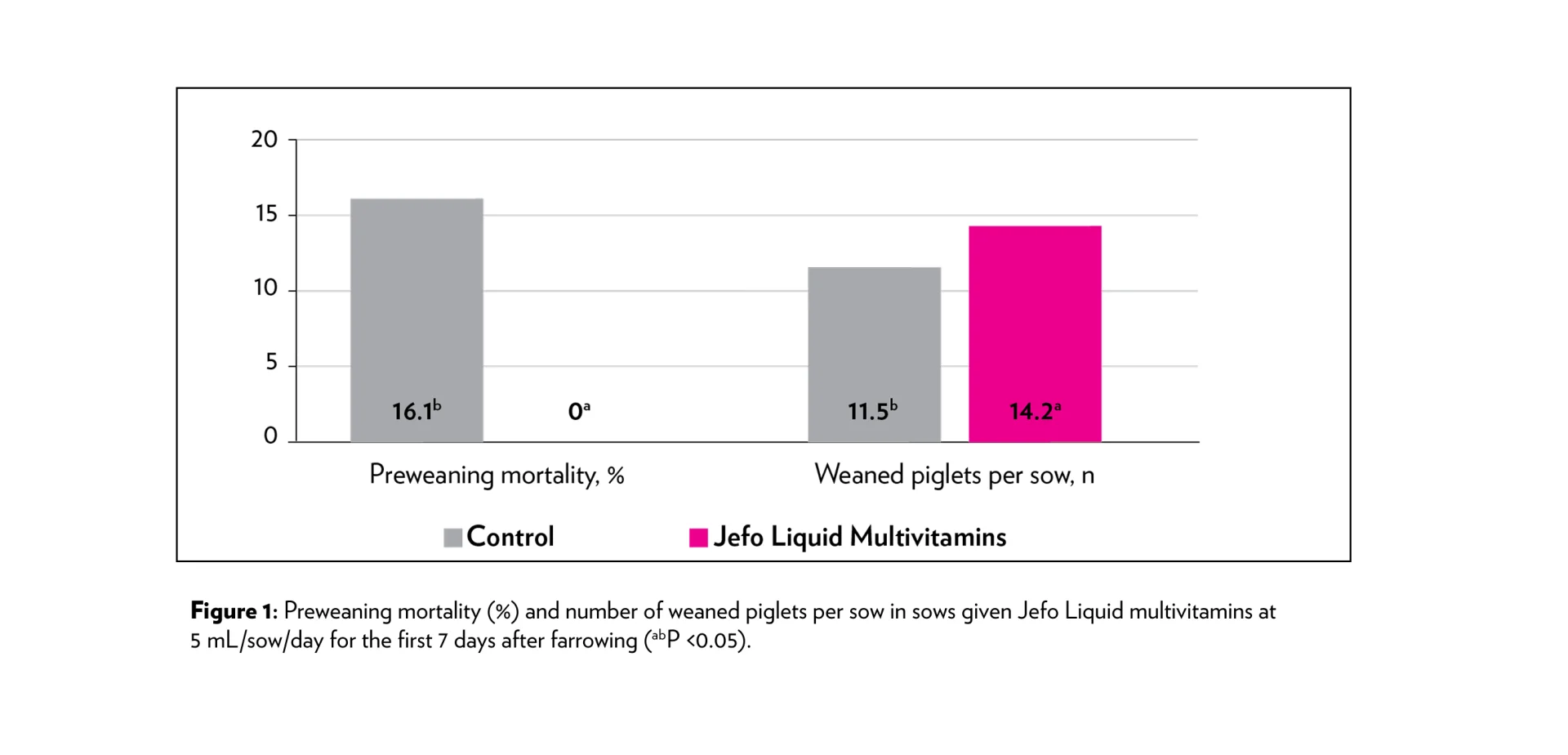
One of the biggest challenges during heat stress is that we are asking sows to perform with less feed. That shifts the focus from total intake to nutrient efficiency, and this is where targeted nutritional strategies become critical. Liquid supplementation of nutrients offers a practical advantage during these periods. When feed intake is inconsistent, water consumption becomes the most reliable route to deliver nutrients. Providing vitamins and functional compounds through water allows for rapid intervention, flexible dosing and consistent delivery across animals. In heat stressed sows, maintaining vitamin status is particularly important for supporting oxidative balance, immune function and overall resilience, which helps to support reproductive performance and reduce mortality in sows and piglets (Figure 1).
Enzymes: reducing the heat load from within
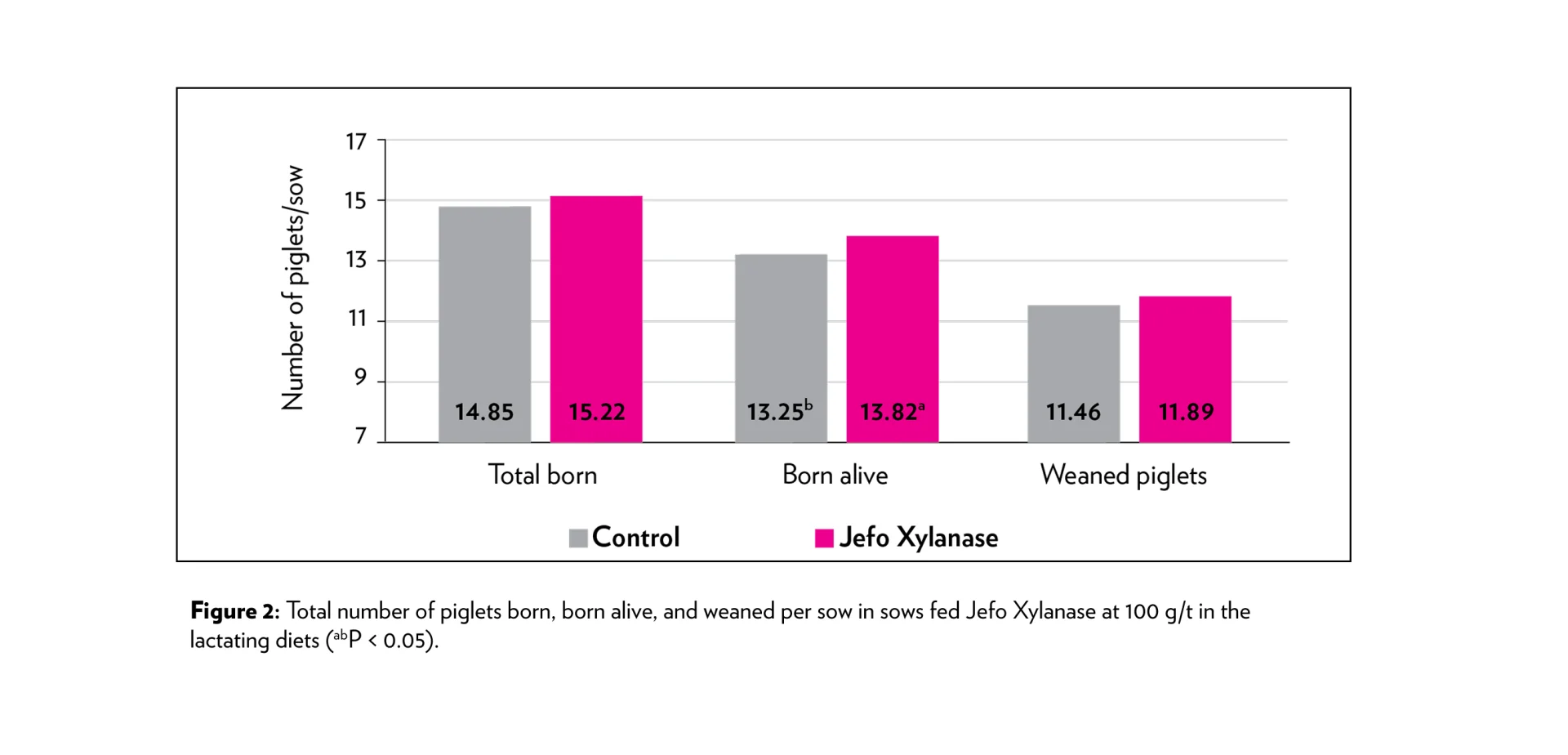
While environmental management focuses on removing heat, nutrition can play a role in reducing how much heat the animal generates in the first place, and enzymes can play a key part in that strategy. By improving nutrient digestibility, enzymes such as xylanase and b-mannanase help extract more energy from the diet at a time when intake is limited and support reproductive performance (Figure 2). This becomes especially valuable in summer formulations where energy density is critical.
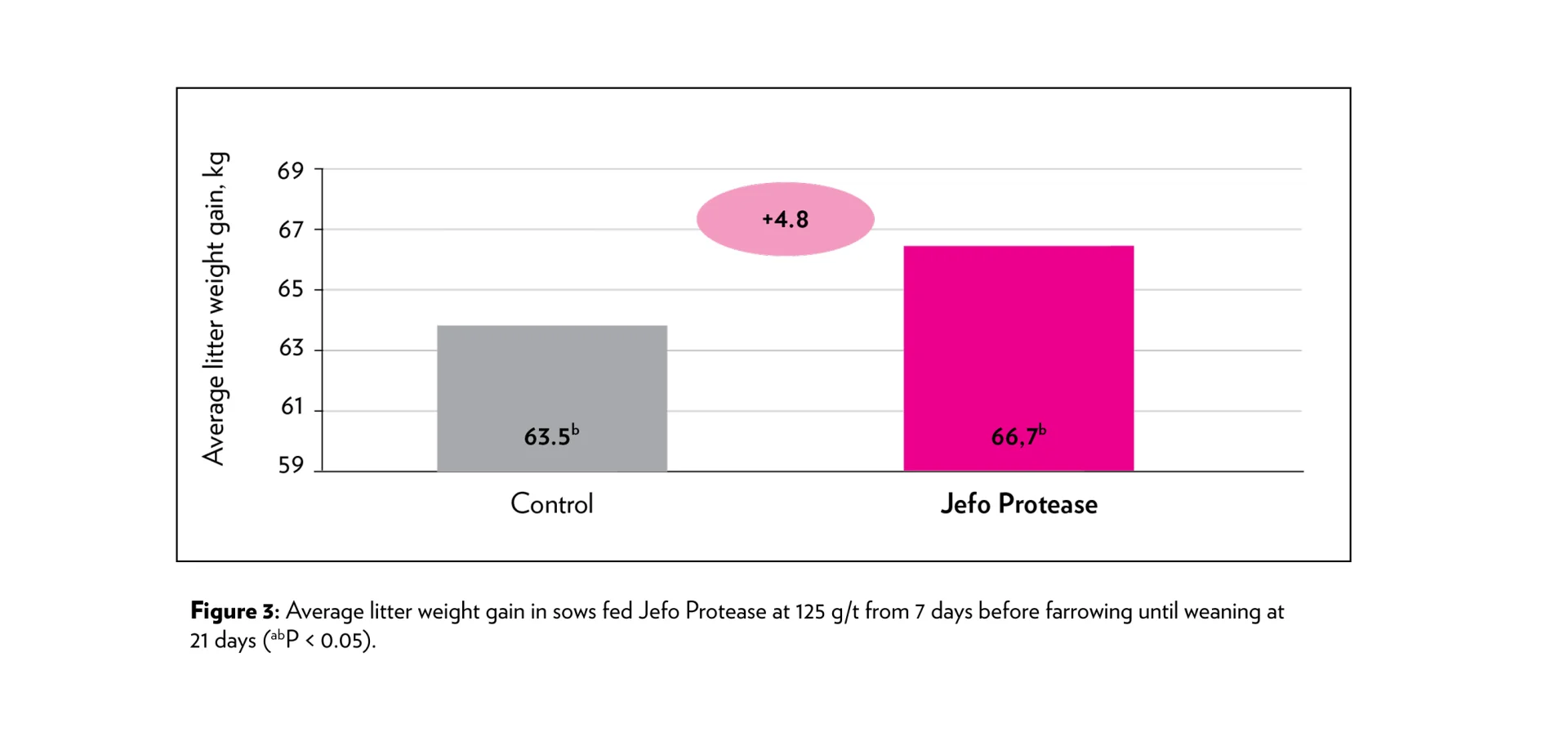
Protease, on the other hand, offers the additional benefit of improving protein utilization, which allows for lower crude protein diets without compromising amino acid availability, hence supporting reproductive performance in sows (Figure 3). This is important because excess protein fermentation contributes to metabolic heat production. In other words, better protein efficiency can translate into a lower internal heat load for the sow.
Integration is key
What stands out today is that no single strategy is sufficient on its own. Ventilation, cooling systems, stocking density and water availability remain foundational. But nutrition is increasingly becoming the lever that determines how well sows adapt when conditions are less than ideal. The combination of liquid additive supplementation and enzyme technology provides a way to address both sides of the equation by supporting the sow externally through hydration and internally through improved nutrient efficiency.
Looking ahead
If recent weather patterns are any indication, summers in Canada will continue to challenge conventional assumptions about heat stress. The question is no longer whether heat stress will occur, but how long it will last and how often it will return within a production cycle.
For producers and nutritionists, this means planning earlier and acting more proactively. Supporting sows through heat stress is not just about preventing losses; it is about protecting the genetic and nutritional investments already made in the herd. In many cases, small nutritional adjustments implemented at the right time can make the difference between maintaining performance and spending the rest of the year trying to recover it.
Don’t hesitate to ask your nutritionist or sales representative if you have any questions.
Our products
See all-
Bestseller
TETRACID 500™
Acidifier for swine feeding -
Bestseller
PROMEGA-3™
Fat supplement for sows and boars feeds -
Bestseller
Multinat EZMIX™
Fermentation products supplement for swine and poultry feeds -
Bestseller
PORCINAT+™
Acidifier and flavouring agent for swine feed -
Bestseller
Porcinat MEGAPRO™
Energy and vitamin E supplement for swine feed -
Bestseller
PORCINAT P™
Acidifier and flavouring agent for swine feed -
Bestseller

Multinat GROW-PRO™
Fermentation product for poultry and swine -
Bestseller
JEFO ZINCO-P S™
Zinc supplement for swine feeds -
Bestseller
PORCINAT+™
Acidifier and flavouring agent for swine feed -
Bestseller
VIT-AL™
Vitamin supplement to be added to the drinking water for chickens (laying hens and broilers), turkeys and swine
Relevant resources
See all-
- Article
- Stress
Supplementing Sows Can Combat Heat Stress
Learn how nutritional supplementation, enzymes and liquid additives help reduce heat stress in sows, support reproduction and maintain performance during summer. -
- News
BELFEED® obtains a European authorisation for gestating sows
JEFO is pleased to announce the extension of BELFEED®'s European authorization for use in gestating sows. This new approval reinforces BELFEED®'s position as a reference xylanase for pig and poultry for optimising the energy recovery of feed. -
- Article
- Pathogens
- Gut integrity
High Protease Supplementation: Exploring the Boundaries
Discover how high protease supplementation improves protein digestion, gut health, microbial balance, and resilience in livestock production, including poultry and swine. -
- Article
- Sustainability
- Feed efficiency
- Pathogens
Cutting Zinc, Not Performance, for New Regulations
Learn how to maintain nursery pig health and performance without the traditional high doses of zinc oxide that have long been a cornerstone of post-weaning nutrition. -
- Article
- Sustainability
- Feed efficiency
- Ingredient Stability
- Pathogens
Synchronized Precision Delivery of Nutrients for Gut Harmony and Sustainability
For decades, animal nutrition strategies have focused on boosting productivity by supplementing diets with high-quality ingredients. While this approach has delivered performance gains, it has also exposed a critical vulnerability: the mismatch between digestion and absorption. -
- Article
- Reproduction
Improving Sow Urogenital Health with Protected Organic Acids
As antibiotics face growing restrictions, innovative strategies are needed to address reproductive health challenges. The use of protected products such as Jefo’s protected organic acids – Jefo P(OA) - offers a science-backed, practical solution to promote urogenital health in sows while improving productivity and profitability. -
- Testimonials
Customer Story | LPF Farm (Thailand)
LPF Farm highlights the benefits of Jefo P(OA+EO) in replacing antibiotics and improving swine production performance. -
- Testimonials
Customer Story | CK and SON (Thailand)
CK and SON farm shares their successful experience using Jefo P(OA+EO) to replace antibiotics and improve sow and piglet performance during lactation. -
- Podcast
Breaking Barriers to Mental Health in Farming Communities
Chris interviews Dr. Heather Schlesser, who shares insights on farmer stress, mental health barriers, Telehealth solutions, and the importance of planning effective farm transitions. -
- Article
Clean Water, Healthy Animals: 5 Easy Steps to Sanitize Your Water Lines
Boost animal health and performance with these 5 easy water line cleaning steps. Essential for biosecurity and effective treatments.